In July of 2003, a group of independent wrestlers pooled their resources into starting a new, wrestler-run indie in the fledgling South California wrestling scene. Pro Wrestling Guerrilla would run its first show in City of Industry, California, with an originally announced Samoa Joe vs. AJ Styles main event becoming Frankie Kazarian vs. AJ Styles as a result of injuries and travel problems for Joe.
It was a promotion that prided itself on showcasing some of the best in-ring professional wrestling fans could find. The action was typically fast, hard-hitting, and technical in front of what became one of the hardest to impress fans across the U.S. This became even more evident when PWG moved in to what would be its longtime home – an American Post Legion Hall in Reseda, California.

The setup became famous for its compact setup, with an 18×18 ring with as many chairs set up as the building can hold and fans sitting so close to the ring they can smack the apron. It was this crowd of regulars that became the ultimate judge and jury for anyone building a name on the independent scene. So when this crowd gave a match a standing ovation, it was clear this was something fans who couldn’t be there needed to seek out.
Names like Kevin Steen, El Generico, Kenny Omega, Candice LeRae, The Young Bucks, and many others still wrestling on TV in 2026 were regulars at the SoCal promotion as it grew. The early years, especially, saw many of the names fans were seeing in a fledgling Ring of Honor and TNA, with Styles and Joe being early foundational names.
The Bucks, specifically, became the proverbial torchbearers for PWG in the 2010s. The brother tag team would seemingly go out of their way to try and make it back home to SoCal so they could make most PWG shows, especially from 2015 to 2017.
It also helped that many of the people involved with PWG behind the scenes had connections in Japan and Mexico, giving foreign promotions a way to break into the U.S. market. It was reminiscent of ECW in the early and mid-90s when names including Rey Mysterio, Eddie Guerrero, and Chris Jericho, among others, broke into the larger U.S. wrestling scene after years of working internationally.
CIMA and Shingo Takagi were among two of the many Japanese stars who stopped in from time to time in those early years representing Dragongate. Given the long travel time and costs, Japanese talent would only appear a couple times a year for PWG’s biggest shows of the year.
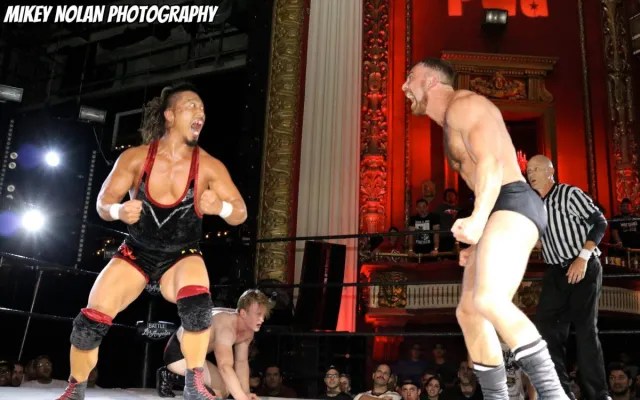
The 2010s, by comparison, saw more and more luchadors start working PWG due to the promotion’s proximity to the U.S.-Mexico border and more independent luchadors starting to work the Southwestern U.S. more regularly. It was also fairly close to where Lucha Underground was being made in SoCal, giving PWG an in with the promotion AAA and the independent luchador scene across Mexico. The Lucha Bros., Drago, Puma King, Black Taurus, and Bandido were just a handful of the names to appear in that period.
And then there was the crown jewel, the show that became a must-see annual event for fans of the indie scene. That show was the Battle of Los Angeles.
The Battle of LA, or BOLA for short, would shift between one, two, and three day formats for the annual single-elimination tournament. It was widely regarded as PWG’s biggest weekend every year that saw some of the top names in the independent scene or who were signed to TNA, MLW, or a handful of other promotions that allowed their talent to take outside bookings. It was also the promotion’s way of suggesting who it considered to be the best wrestler on the scene at that time.
The roughly 20 years of PWG’s life saw it become one of the premiere indie promotions for wrestlers to work for. If someone had managed to build a prominent name on the indie scene, getting booked by PWG was seen as a form of validation and someone both fans and the larger promotions like WWE should keep an eye on.
And take notice WWE did as PWG became a regular stop for William Regal as he shifted away from the ring to working more backstage for WWE as a talent scout. NXT’s Black and Gold era reflected this as most of the prominent independent names brought in during this time.
The good times couldn’t last, though, and PWG was forced to suspend operations for the rest of 2020 as a result of the COVID-19 pandemic. PWG wouldn’t run a show until August 1, 2021, with Mystery Vortex 7, a show with no card or talent announced beforehand.
The promotion would limp on for the next two years, running fewer and fewer shows until PWG TWENTY: Mystery Vortex in August of 2023 becoming the de facto final show in the promotion’s history. Super Dragon, one of only two of the six founders still involved in PWG, revealed his partner at the time was going through health issues that required the couple’s full attention. As a result, he said the promotion would be on “hiatus” for the foreseeable future.
While it was never officially shut down, most fans don’t expect the SoCal indie destination to return soon, if ever. It would be a true shame if it didn’t as this would mark another iconic and key indie promotion of the 2000s and 2010s gone, joining the likes of Evolve and Dragongate USA.
The loss of PWG, though, hurts even more because of how PWG was regarded during the peak of its popularity. Some indies would still manage to create some big buzz in the years since the last PWG show, including GCW and DPW, but no one has ever really managed to replicate the type of excitement PWG was able to generate.
In a world where promotions and wrestlers, alike, are trying to find ways to stand out and be successful, PWG was truly one of a kind. Whether it was the American Legion Post Hall or the Globe Theater or anywhere else it ran a show in that 20 year period, fans knew it was destination viewing when a new show was announced. Even celebrities made the odd appearance at a PWG show over the years, one of the more famous instances being Joe Manganiello and Sofia Vergara in 2015.
The Bucks superkicking LeRae with an Air Jordan with thumbtacks glued to the entire sole, Generico ripping a vent off the roof during a ladder match, Jushin Thunder Liger controlling time with a clicker and no shortage of broken chairs from dives out into the audience are just a few of the memories left behind by the SoCal mainstay. If it is truly time to leave PWG in the rearview, at least fans have these memories and plenty, plenty more to look back on and celebrate as the wrestling world continues to evolve.
So thank you, PWG, and bye for now.

