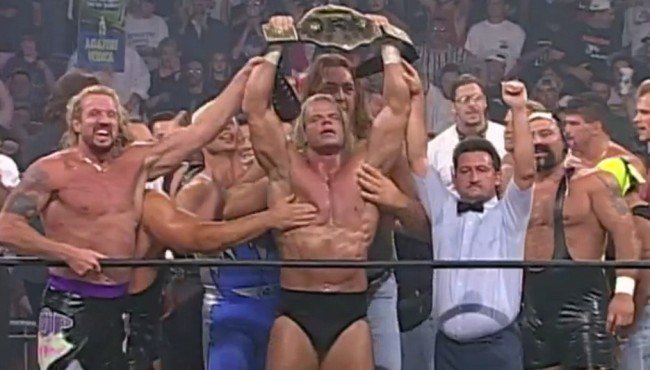
With two major national wrestling promotions again, it can’t help but conjure up old memories of WCW and WWF in the mid- to late 90s. AEW and WWE don’t go head-to-head on weekly TV anymore, but it has not made the perceived rivalry any less tense for fans and leadership in both companies. It all echoes WWF and WCW going back-and-forth with each other on Monday nights for fans’ viewership and money.
That may be the state of the larger industry, but what about AEW and WWE, specifically?
As March 2026 begins, the two national promotions continue to echo the 1990s, but more specifically the good and bad of WCW. The late-promotion had a wild lifecycle in the 90s, with some of the highest-highs possible intertwined with some of the worst moments in wrestling history.
DISCLAIMER
I want to be clear, though, this is a subjective argument from me and me, alone. I am primarily an AEW viewer, while only following along with WWE via reviews, clips, and news, as opposed to the weekly shows. However, I would argue that the points I make in this piece are reflective of the issues that drove me away from WWE to begin with.
That said, I want to be clear my goal is not to “yuck anyone’s yum” as it were. This is merely my opinion on the state of the two major national companies in the first two months of 2026 and mine alone.
The Good
First is the good, which has been seen more-so in AEW to kick off 2026.
As WCW entered 1995, a young executive by the name of Eric Bischoff found himself at the head of WCW and kickstarting the Monday Night Wars with the debut of Monday Nitro on TNT, opposite Monday Night Raw on USA. He had names, but he and the other top brass in WCW realized they needed more than just Hulk Hogan, Ric Flair, and several other aging stars.
The following year would see WCW star bringing in a whole swath of young names and foreign stars to freshen the rest of the card. It was best incapsulated by the WCW Cruiserweight Championship, which saw names such as Rey Mysterio Jr., Eddie Guerrero, Syxx, Dean Malenko, and many other talented in-ring performers steal the show on a regular basis with faster, more athletic matches.
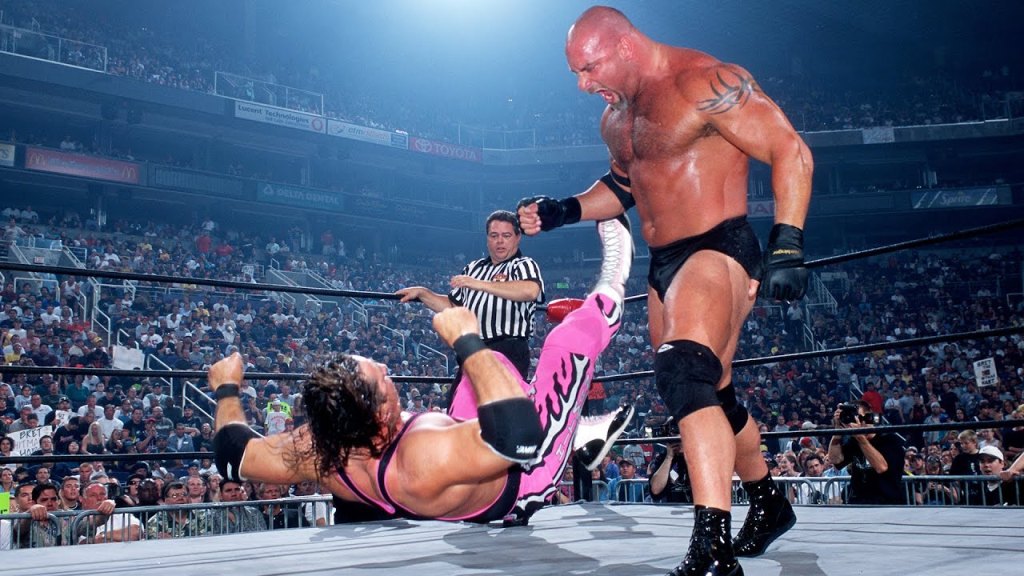
WCW’s main event scene would also explode with the nWo’s formation in July 1996. The heel faction founded by Hollywood Hogan, Scott Hall, and Kevin Nash would become the biggest thing in professional wrestling. The group would bring in 90’s megastars like Dennis Rodman and Jay Leno to work with WCW for short periods, showing how far the group’s popularity reached.
The reinvention of Sting as “Crow Sting” would only add fuel to the fire.
All this would coalesce into a show that, for a time, was some of the best wrestling TV. The best episodes of WCW Monday Nitro offered something for everyone, but not at the cost of WCW’s identity. An opening cruiserweight match between Psicosis and Chris Jericho could be immediately followed by “Big Poppa Pump” Scott Steiner cutting some of the best and most entertaining, albeit somewhat incoherent, promos imaginable.
On top of that, every segment on the show served a purpose. A match or promo wasn’t there just for the sake of killing time. Every segment on Nitro would feed into some ongoing story or rivalry and felt important.
If a fan tunes in to Dynamite or Collision, they will not have their time wasted. The shows are delivering some of the best in-ring product in the world, with a true mix of everything from lucha libre to puroresu and everything in-between. The importance is there, too, as each promo or match feeds into something either on the same show or planned for one of the next two shows.
The array of talent dotting the rest of the card is also a who’s-who of international names, rising stars, and rugged veterans delivering that incredible in-ring work.
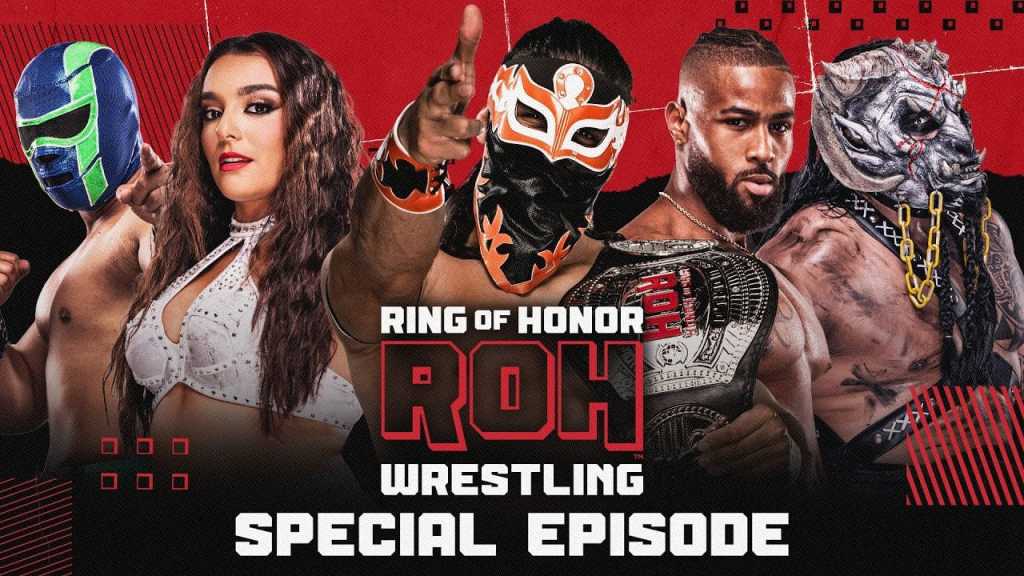
Even Ring of Honor, which is far from perfect, appears to have hit a stride heading into 2026.
It isn’t to say AEW is above criticism, as there is still improvements that could be made. While the women’s division has made massive improvements, airtime continues to be something of a touch-and-go battle. One example would be getting at least two women’s matches consistently on Dynamite, even if one is a squash match. That said, Thekla has still broken out as one of the more “must watch” names across the whole show on her rise to the AEW Women’s World Championship.
But as said above, a viewer won’t feel like their time wasted.
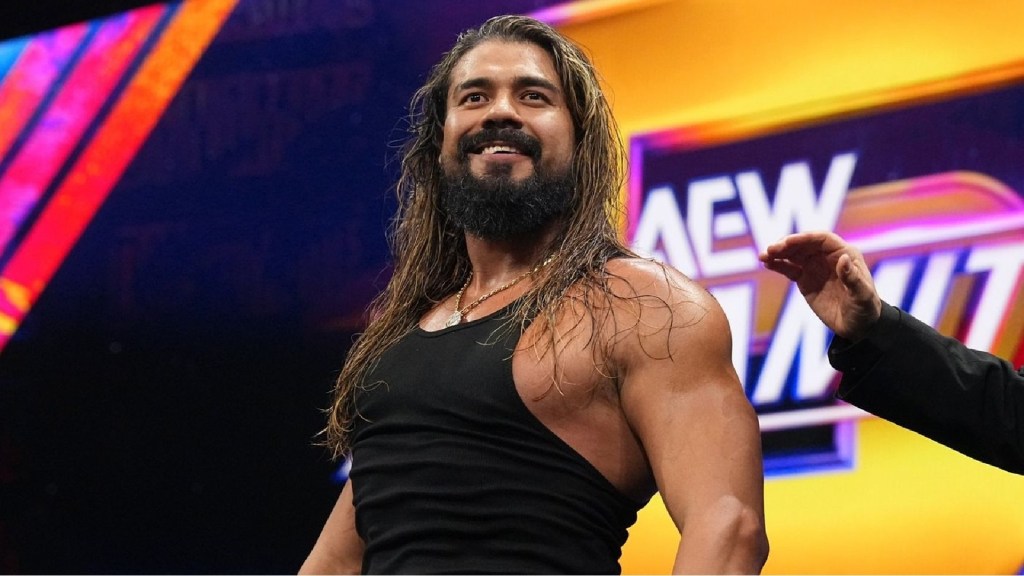
And while the main event scene doesn’t have a nWo, it does have one of the best mixes of top talent in recent memory gunning for the AEW Men’s World Champion, Maxwell Jacob Friedman. This has resulted in Andrade becoming a real main event player seemingly overnight following his return, Brody King and Bandido springboarding from tag team champions to the top of the card, and Swerve Strickland delivering a vicious beating to Kenny Omega and putting the ‘Best Bout Machine’ through the announce table with a vertebreaker.
Go watch an episode of WCW Monday Nitro from July 1996 to August 1998 and the similarities will stand out almost immediately.
Even a “throwaway” taped episode of Collision echoes the fun, weirder side of WCW. And if you don’t believe me, look up an episode of early- to mid-90s WCW Saturday Night and tell me a taped Collision isn’t just the modern version of Saturday Night.
The Bad
Unfortunately, it appears the bad of WCW in the 90s is much more visible from WWE through February 2026.
Circling back to WCW’s main event scene, as hot as it got thanks to the nWo, it didn’t resolve the obvious issue that most of the promotion’s top names were getting up there in age. Hogan, Flair, and Randy Savage were already around their mid-to-late 40s when the nWo blew up, while Sting, Lex Luger, Kevin Nash, and Scott Hall were not young names, either. Add to that the apparent death grip many of these names had on the top of the card, and suddenly a hard ceiling existed on the main event that the rest of the card struggled to get around.
It would lead to the departure of names like Chris Jericho, Chris Benoit, Eddie Guerrero, and Big Show, who was known as The Giant in WCW. All four of these names would become far bigger names in WWF/E, all winning world titles at various points and three who got to main event a WrestleMania.
Plenty of talented names remained in WCW until the end, including Rey Mysterio, but never found themselves much higher on the card than where they had been when they debuted. If they weren’t somehow related to a top name or “boys” with them, you had no chance of even sniffing a real main event spot.
WWE is running into a similar problem as the top of the card is aging out. Seth Rollins, at 39-years-old, remains one of the younger consistent names at the top, while most are anywhere between 40 and 50-years-old.
Bron Breakker, the son of Rick Steiner and nephew of Scott Steiner, appeared to be the one young name that was being groomed for a main event push before suffering a severe, aggravated hernia and underwent emergency surgery.
As of March 1, 2026, he is out indefinitely and could potentially miss WrestleMania 42.
WWE isn’t lacking in talented, younger names, though. Dragon Lee, Carmelo Hayes, Ilja Dragunov, Solo Sikoa, and Pete Dunne are just a few of the names in their late-20s to early-30s that feel like they could, and maybe should, be further up the card than they are in early 2026.
Even the women’s division, where some of WWE’s biggest names are currently found, feels as if it has cooled off significantly. The injury to Bianca Belair has certainly been a blow to the division, but the creative efforts put into the division and stars like Rhea Ripley, Becky Lynch, Liv Morgan, Iyo Sky, and Raquel Rodriguez, among others.
The bombardment of ads and sponsorships, smaller match cards, and longer downtime between those matches has all worked against WWE amid what fans and critics feel is a larger creative downturn.
It echoes of WCW across 1999 and 2000 as a sharp creative downturn took place, only made worse by multiple attempts to shake up WCW’s creative team. Eric Bischoff, Kevin Sullivan, Kevin Nash, and Vince Russo were just a few of the names rotated in-and-out as head of creative over those two years. It resulted in cards that, ironically, the opposite of modern WWE shows.
Nitro would start having more matches, but those matches would average 2 to 5 minutes while angles and promos are given no room to breath. The creative, itself, would also be lambasted for everything from lack of direction to being in extremely poor taste.
One added wrinkle to WWE that WCW did not deal with, though, are the moral-driven reasons wrestling fans have continued to hammer WWE, and have only gotten louder due to WWE’s creative downturn.
WWE’s deal with Saudi Arabia continues to be a consistent point of criticism given the human rights violations committed by Saudi Arabia and its leadership. It has been made worse with the announcement that WrestleMania 43 will be in Riyadh, Saudi Arabia, in 2027.
There is also the Janel Grant lawsuit against Vince McMahon and WWE which remains ongoing. Grant made her first public appearance on February 20, 2026, to the Connecticut Alliance to End Sexual Violence. She primarily spoke about the NDA she signed with McMahon and the last few years of her life dealing with her lawsuit and cooperation in federal investigations against McMahon and WWE.
It isn’t to say everything in WWE is experiencing a downturn, though. Since AAA found a home on TV in Mexico and on YouTube in the U.S., it has become an extremely popular show with more hardcore fans thanks to a strong in-ring product and variety of stars between established luchadors and names in WWE’s developmental system. Evolve is also becoming an underground sensation with some fans thanks to names like Sean Legacy, Kendal Grey, and many of the WWE ID and PC talent.
WCW’s Legacy
The states of WWE and AEW in early 2026 is just another example of the impact WCW left on the professional wrestling industry despite dying roughly 25 years ago.
The immediate impact of WCW, especially in the late 90s, was obvious at the time, but hindsight is always 20/20 and this has only added to WCW’s legacy. An obvious example is the formatting of most modern TV wrestling, including WWE’s, is modeled in some form on Nitro that helped propel WCW to its most successful period.
Many of the stars who gained their first national exposure, most notably Chris Jericho and Rey Mysterio, are still working today as active wrestlers while others such as Shane Helms and Dean Malenko are serving as backstage producers in WWE and AEW.
Several of them have even had their kids take the jump into professional wrestling, with Dominik Mysterio becoming a prominent part of WWE TV while his sister Aalyah has started her in-ring training according to Rey Mysterio. Malenko’s daughter, Marie Malenko, was also confirmed to be one of the many names at a major February 2026 WWE tryout.
Given how much time has only added to WCW’s legacy, this will likely continue for as long as professional wrestling exists and there are two national TV promotions to build on that legacy.



 Minimum Wage Nerd