There is a common phrase used when an industry is seemingly revitalized off the back of a larger entity within said industry experiencing a boom – a rising tide raises all ships.
In the professional wrestling sphere, the common consensus for years has been when WWE gets hot, the rest of the industry reaps just as much of the rewards as WWE. The Attitude Era and Monday Night Wars is the period often used to reflect this idea, with wrestling enjoying a boom period that was arguably as big, or maybe even bigger, than the golden age of the mid to late-80s.
The Monday Night Boom
Two national promotions went head-to-head on Mondays, WWF with Raw is War and WCW with Monday Nitro, in a battle for ratings dominance. It became destination viewing for fans excited excited to see what could happen and who may show up, with plenty of names like Jeff Jarrett and The Radicalz jumping between WWF and WCW during this time.
Outside of the “big two” on national TV, a promotion operating out of Philadelphia, Pennsylvania, was becoming an underground sensation as Extreme Championship Wrestling offered a more mature, violent, grittier wrestling product that allowed it to stand out from WWF and WCW. The buzz quickly caught the other two companies’ eyes, with many of ECW’s top names being signed away to make their national TV debut.
ECW would also lay the groundwork for what would become the modern independent scene, specifically the “super-indie” that was able to book some of the biggest independent and international stars available. WWF would help buoy ECW for several years, as well, with financial help and even an angle on Monday Night Raw to promote ECW’s first pay-per-view, Barely Legal, in 1997.
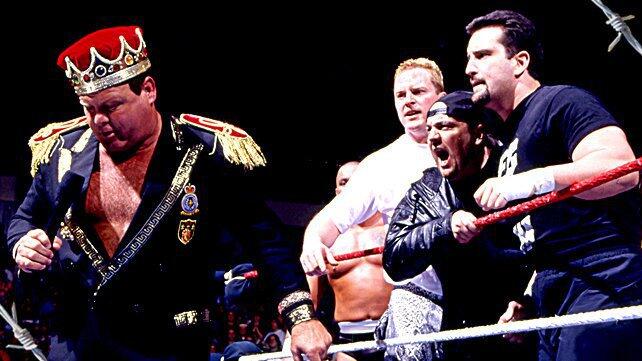
It truly was a period of rising tides, with all three companies benefiting from each other’s success and failures. WWF and WCW figured out what appealed to viewers at the time and was able to draw more eyes on their products than anyone thought possible while ECW carved out a faithful fanbase of its own along with becoming a pseudo-“feeder promotion” for the two bigger promotions. Steve Austin, Mick Foley, The Dudleys, Raven, Rey Mysterio, and Chris Jericho were just a handful of the names who used ECW as a springboard to the bigger companies and potential success.
Despite the success of this period, it quickly becomes clear this may be the only clear period where WWE’s popularity actually benefitted the rest of the industry, at least under Vince McMahon’s tenure at the head of WWE.
A Golden Era…..Of One?
Fans need only look back to how McMahon, against his father’s wishes, began his national expansion in the mid-80s. The new promoter quickly began buying up some of the biggest name talent available across the national territory system, with the AWA in particular being hit hard as Hulk Hogan, Gene Okerlund, and Iron Sheik were among the names the WWF took from the Minneapolis-based promotion.
McMahon’s aggressiveness didn’t stop there, as he began going into these territories and buying the TV, airing his product in the timeslots previously filled by the regional promotions in handshake deals with local TV stations. The most infamous of these was “Black Saturday,” when the WWF took over the timeslot previously filled by Georgia Championship Wrestling’s World Championship Wrestling show on the TBS Superstation. To say fans didn’t take the change well would be an understatement as viewership declined sharply and TBS regularly received viewer letters sharing their frustration at the change.
McMahon ultimately sold the slot to Jim Crockett Promotions in July 1985 as the slot was costing him more and more money as time went on. Media mogul and TBS founder Ted Turner was also keen to get out of the deal to the declining ratings and impact it was having on the rest of the outlet and leading to the billionaires’ infamous rivalry.
As the 80s rolled on, McMahon continued with his national expansion with the launch of WrestleMania in 1984 and tours pushing out of the WWF’s home region in the northeastern U.S. to the rest of the country. Many of the remaining territories tried and failed to fight, with Jim Crockett Promotions being among the last of the “old guard” of the National Wrestling Alliance to fall as the promotion sold to Turner in 1988, renaming it World Championship Wrestling.
WWF was at the top, but it came at the cost of an entire territory system that had existed since 1948. Mid-South, Championship Wrestling from Florida, Mid-Atlantic, World Class, and so many more that stood as regional institutions were gone, slowly replaced by various independent promotions that were able to carve out small audiences of their own, but were limited to even smaller areas to operate in the fallout of WWF’s surge to the top.
Despite this aggressive approach by McMahon to dominate the industry, there is still an argument that if it wasn’t McMahon, another promotion was eventually going to have to nationalize. A rapidly changing TV landscape was going to force one promotion’s hand eventually, and McMahon was simply the first to see what was coming. He saw the tide of exposure the national cable overlay could give a promotion and rode that tide rather than resting on his laurels or even trying to fight it.
But that was the 80s, what about the modern scene?
It is the modern era of pro wrestling where the notion of a hot WWE being a boon for the wider industry really begins to lose weight.
The Modern Age
First, there is the late-2010s.
It was around 2016 that fans were once again growing disgruntled with the product on weekly WWE TV. Babyface Roman Reigns received mixed reactions akin to 2010 John Cena at the best of times, the creative felt out of touch with modern sensibilities, and upward momentum felt almost impossible for anyone that wasn’t handpicked by McMahon.
NXT became a bright spot for fans trying to escape the doldrums of WWE’s main roster shows with modern ringwork and simpler creative that left fans satisfied instead of feeling like their intelligence was being insulted. WWE’s developmental arm became an in-house “super indie” with a who’s-who of prominent stars such as Samoa Joe, Shinsuke Nakamura, Kevin Owens, Adam Cole, Keith Lee, Johnny Gargano, Tommaso Ciampa, Io Shirai, Shayna Baszler, and many others from outside WWE contributing to what has since become known as the “Black and Gold Era.”
Things were going even better outside of WWE as the U.S. indies was experiencing its own boom thanks to a glut of unsigned or available talent from smaller promotions like Ring of Honor and TNA available to bring in. Even if WWE picked up several big names, as it did several times between 2016 and 2021, there was still plenty of talent for the indies to book.
New Japan experienced its own boom off the back thanks to the viral exposure of Bullet Club, one of the promotion’s top stables that took clear inspiration from the nWo, and a roster of wrestlers like Kazuchika Okada and Kenny Omega putting on acclaimed matches fairly regularly.
And when the calendar rolled over into 2019, a new entity emerged on the national stage in the U.S.
All Elite Wrestling was formally announced in January 2019 after months of rumors that a new promotion capable of contending with WWE on national TV. Backed by Tony Khan, son of Jacksonville Jaguars and Fulham FC owner Shahid Khan, and an initial roster including Kenny Omega, Jon Moxley, and Chris Jericho as the clear top names. The promotion held four pay-per-views between May and August before its flagship show, Dynamite, premiered on TNT in October.
WWE may have been a mainstream establishment, but it was clear that the promotion’s main roster shortcomings was contributing to the industry-wide surge taking place. Then the COVID-19 pandemic hit and the world shut down in 2020, with quarantining mandates put in place globally to try and slow the spread of the virus.
Jump forward to 2022 and things begin to look quite different.
McMahon would resign in June 2022 following a Wall Street Journal report on alleged hush money payments the WWE Chairman paid to multiple women over the years for alleged affairs and sexual misconduct. This resulted in Triple H taking over the company’s creative direction while Nick Khan and Stephanie McMahon heading up the business side of things.
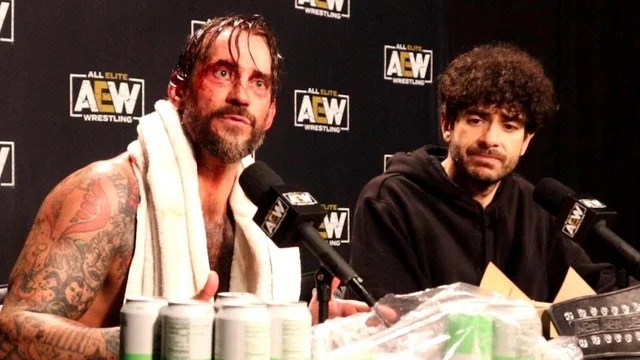
AEW began to hit its own rough patch as Cody Rhodes, one of the promotion’s founding stars, departed to rejoin WWE and was quickly established as a top name with a massive return and win over Seth Rollins at WrestleMania. Tensions were also reportedly rising backstage between CM Punk, who returned to wrestling in 2021 by signing with AEW, and the remaining members of The Elite that ultimately resulted in the now infamous “Brawl Out” evening at All Out that saw Punk shoot on the locker room, leading to a fight involving himself and friend/AEW producer Ace Steel against the Young Bucks and Kenny Omega, though Omega’s involvement was reportedly more in an effort to break up the fight and get Punk’s dog, Larry, away from the fight.
The indies weren’t fairing much better either as the founding of AEW in 2019 led to many top names being signed to either company, draining the wider scene of a lot of star power. Several indies were also forced to close their doors as a result of the pandemic.
The UK indies, in particular, were hit hard as a result of WWE’s effort to try and monopolize the scene that was booming in the 2010s via NXT UK, despite partnering with the promotions Progress in England, ICW in Scotland, and WXW in Germany. By the time NXT UK closed shop, the once booming scene was left handicapped by WWE’s efforts, leaving RevPro as the only prominent UK indie that wasn’t hurt or forced to close due to this period.
New Japan went through its own downturn, as well, due in large part to stringent quarantine regulations that made it difficult to bring in their foreign talent regularly.
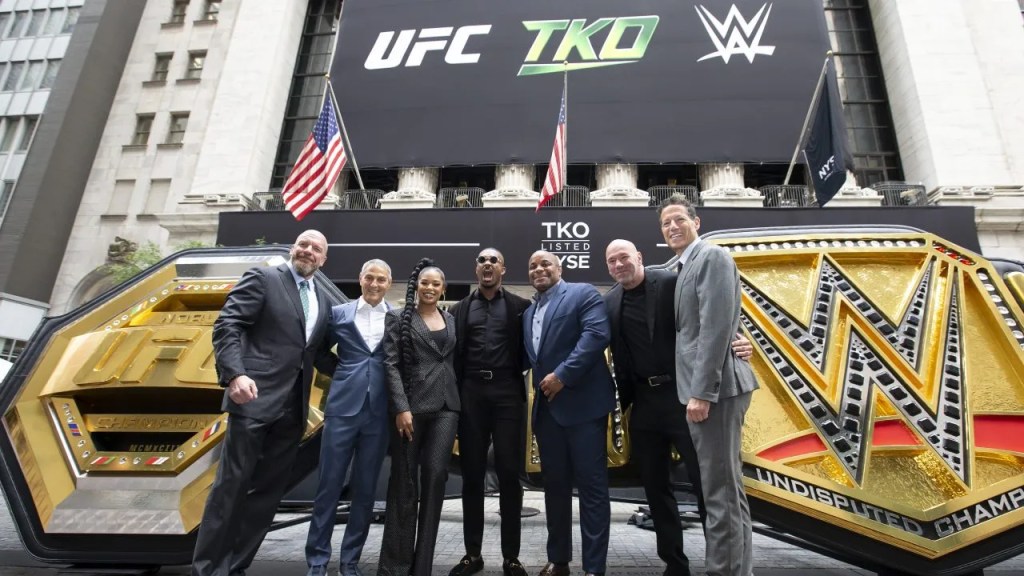
Despite all this, WWE was able to shake things off and closed out 2022 with a resurgence in popularity thanks to a fresh creative vision headed by Triple H and the immediate aftermath of the COVID-19 quarantines being lifted. McMahon would return to WWE in 2023 to facilitate a sale to talent agency Endeavor, which also owned the UFC, that would see the two entities merged into TKO Group Holdings, before he was once again out of the company by January 2024 in the wake of the Janel Grant lawsuit aimed at McMahon, his longtime confidant John Laurinitis, and WWE.
Things had never been better for WWE at this time. Fan interest was higher than it had been in years, the product felt refreshed, there was a slew of new and established stars, and business was booming.
The same could not be said for the rest of the industry. Despite a rising tide for WWE, the larger wrestling landscape was still going through various rough patches for one reason or another.
AEW would be dominated by Punk-related drama until he was fired following another backstage fight, this time at All In 2023 at Wembley Arena in London, England, leading to Punk’s return to WWE at Survivor Series later that year. The overall product had cooled off significantly, as well, reflected in lower TV ratings and ticket sales, though pay-per-views would continue to be a regular bright spot for the company.
More independent promotions would close their doors in this period, unable to bounce back from the costs the pandemic had incurred. And while there was plenty of talented unsigned names, there were few that had the name cache many had during the indie boom of the late-2010s.
Things for the wider industry wouldn’t begin to really turn around until 2025, when the cracks in WWE’s massively successful machine were becoming more noticeable.
First was the rising ticket prices, which were reaching record highs as floor seat packages for tentpole shows like WrestleMania and SummerSlam cost north of $50,000. Fans and pundits were becoming more frustrated with WWE’s creative direction, pointing to how many angles and feuds felt dragged out while the promotion seemed gun-shy on pushing some of the younger names on its roster, such as Bron Breakker.
By contrast, AEW was beginning to see the rewards of bolstering the roster with names like Mercedes Mone and Will Ospreay at the top of the card and stabilizing the backstage environment in 2024. This would set the stage for 2026, where the promotion has enjoyed what many have felt is the best stretch of TV in the promotion’s history, or at least since late-2021 through early-2022.
The indies and international scenes stabilized as well. Mexico has been enjoying its own boom period, reflected in regular sellouts for CMLL and the now WWE-owned AAA. New Japan has been forced to elevate names fans have been wanting to see at the top of the card for some time including Yota Tsuji and the Knock Out Bros.
And the indies finally stabilized, both stateside and in Europe. There was once again a wealth of names working globally capable of drawing crowds wherever they worked. Some established promotions such as Progress would change hands while new ones slowly began popping up, often with established wrestlers taking a more prominent part in the promotion’s operation or running them, outright.
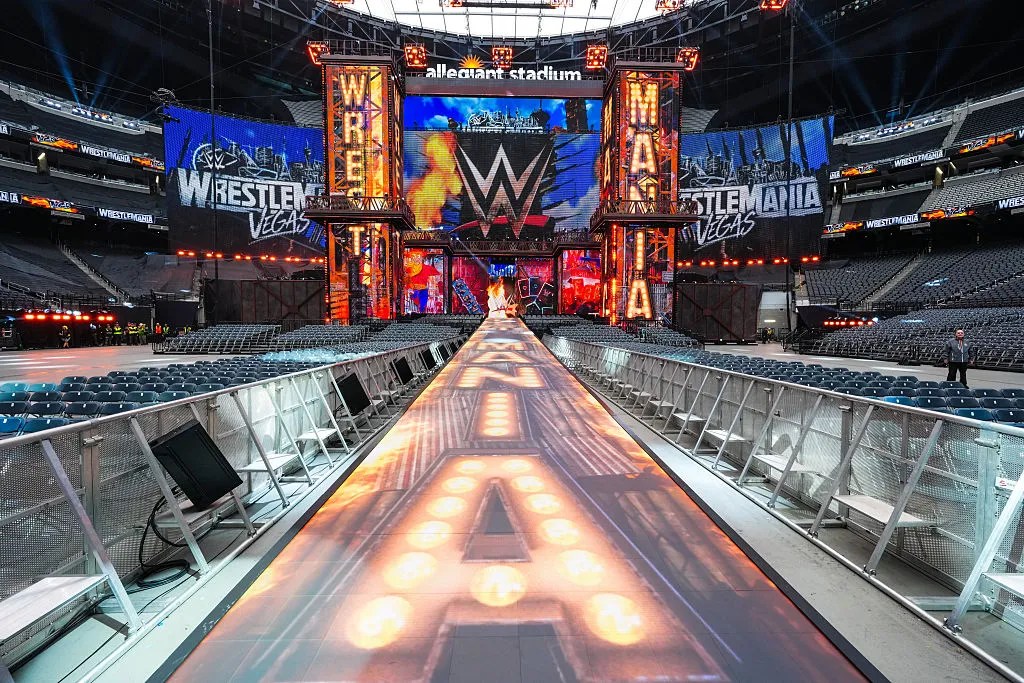
This juxtaposes a WWE that has, once again, hit a lull in business as high-ticket prices and spreading out content across multiple platforms is becoming too much of a financial commitment for many fans, especially in a wider global economy where inflation has run rampant in recent years. Creative that feels lackluster and slow hasn’t helped things, either, which were both on display at WrestleMania 42 between the notable drop in attendance from the year before, also in Las Vegas, Nevada, and messy creative direction for the night one main event of Randy Orton vs. champion Cody Rhodes for the WWE Undisputed Championship after the inclusion of Pat McAfee and Jelly Roll.
Opposite Impacts
All this reflects a decade of ups and down that truly reinforces that WWE, despite its size and influence, isn’t the boon for the wider industry it sometimes claims to be. If anything, it says the opposite and that WWE’s low points is the actual rising tide for the wider industry that can be seen going back to the WWE’s golden 80s.
The 80s came at the cost of the territories, the late-90s through 2001 came at the cost of WCW and ECW, and the modern boom came at the cost of the momentum for the larger industry. In each case, there are outside factors that played instrumental roles, from an evolving and modernizing TV landscape to a global pandemic, that still need to be acknowledged for the impact, negative or positive, those also have on the industry. However, it doesn’t change the fact that WWE’s popularity didn’t “trickle down” the way some would have had fans believe in the past and it is more evident than ever in the modern wrestling world.
 Minimum Wage Nerd