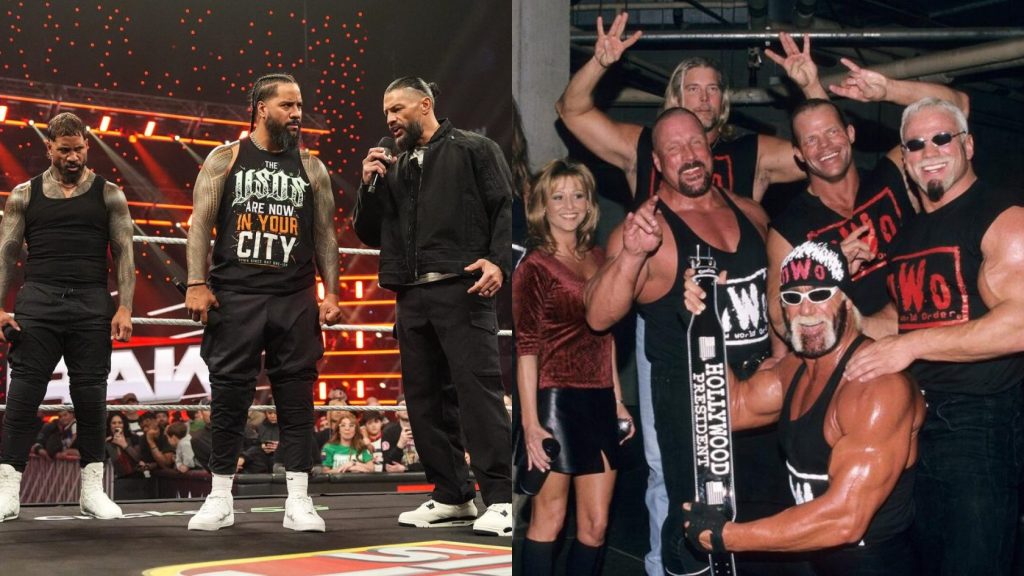
Picture this.
It is the end of a massive professional wrestling show and the seemingly unstoppable babyface has been left lying in the middle of the ring, with the top name in the promotion standing over them while the faction that was split appeared to come back together to see witness the babyface’s defeat. Fans, in the meanwhile, are left to question what is happening and if the promotion is really going back to this well, again.
If this sounds like something involving The Bloodline in WWE or new World order in WCW, both are correct.
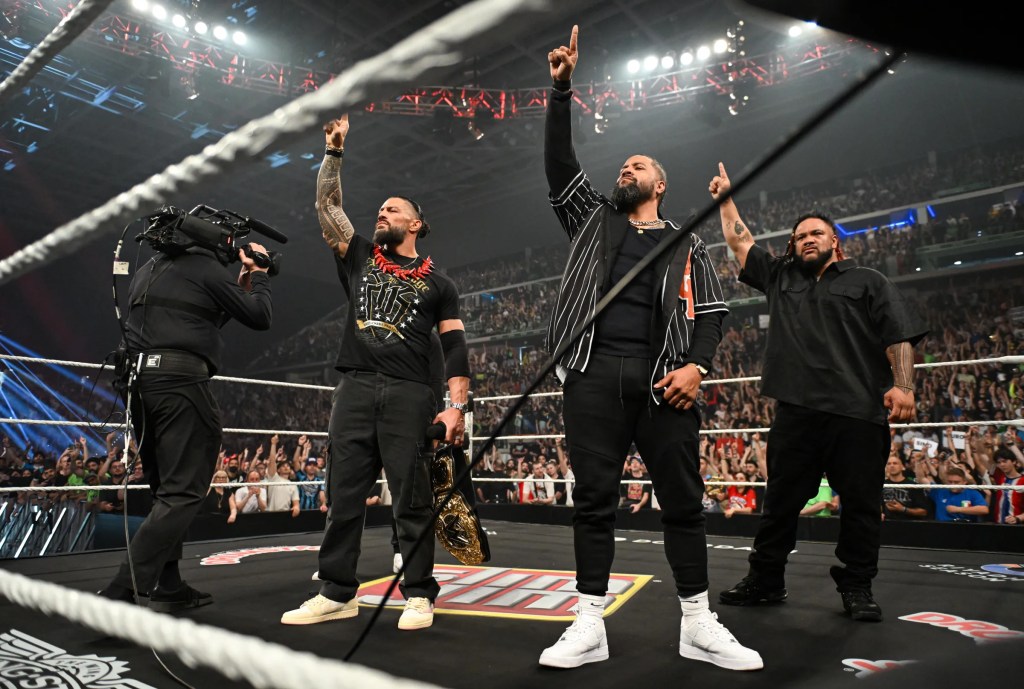
This was the scene at the end of WWE Clash in Italy, where Roman Reigns defeated Jacob Fatu to retain the World Heavyweight Championship after a Tribal Combat match, with the Usos joining Roman in the ring while Solo Sikoa and MFTs watched from behind the ringside barricade.
It was also the scene at the end of the January 4, 1999, edition of WCW Monday Nitro, the night of the infamous Fingerpoke of Doom that saw WCW World Heavyweight Champion Kevin Nash effectively lay down and lose for the returning Hulk Hogan. Goldberg would attempt to attack them but was ultimately beaten down and left lying in the ring by a reunited nWo.
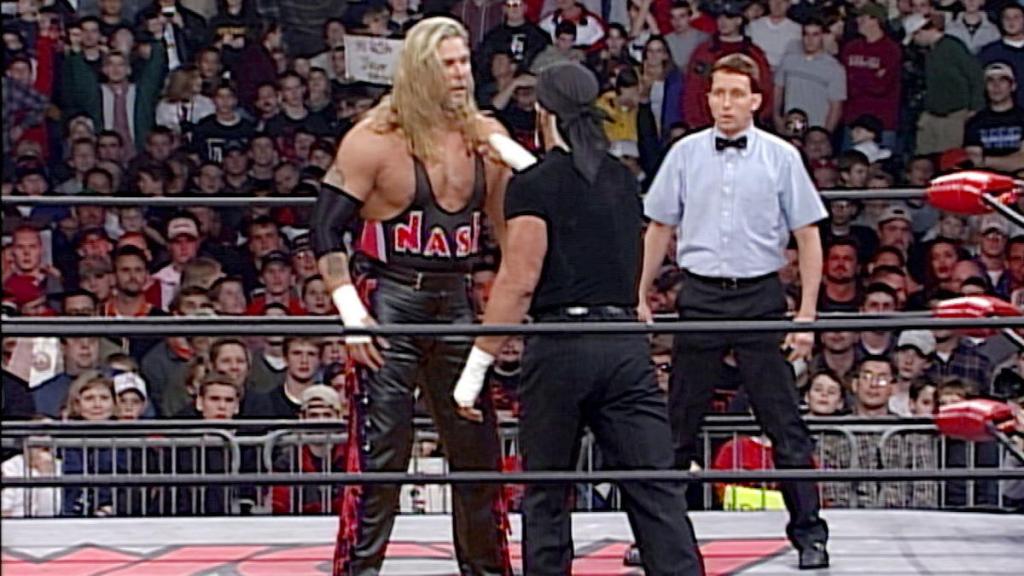
In both cases, many fans responded with one simply question – really?
Despite a proverbial bow being tied off on The Bloodline story coming out of WrestleMania 40 in 2024, WWE continues going back to the group time and time again. The group has been split up, reunited, had a “civil war” storyline with Solo Sikoa breaking off to start the MFTs, and Roman remaining a constant in the world title scenes as other wrestlers question his motives on screen. It wouldn’t be the first time Fatu found himself at the center of Bloodline-related drama, either, as he previously served as Sikoa’s “right-hand” in the MFTs before breaking away from that group, only to find himself having to serve Roman after losing at Clash in Italy.
The way WWE has gone back to this well time and time again is almost exactly what happened with the new World order once it got past the seemingly natural endpoint of their time on top in WCW after Starrcade 1997 and Sting defeating Hogan to win the WCW World Title after a year-long build.
Granted, a controversial finish often pinned on Hogan ensured the ending wasn’t as clean as it should have been. The group began to splinter, with nWo Hollywood and nWo Wolfpac forming due to Nash being sick of Hogan’s leadership. The rest of 1998 was spent with the two groups battling each other at various points, sometimes with WCW representatives getting involved as the third party in those fights. Everything would ultimately end up back to square one after the Fingerpoke of Doom, but the reformed nWo would quickly fizzle out over the coming months. The group reformed again as nWo 2000 in December of 1999, with the initial lineup of Kevin Nash, Scott Hall, Bret Hart, and Jeff Jarrett changed to Hall, Jarrett, the Harris Twins, and Scott Steiner due to injuries suffered by Hart and Nash, with Hart’s ultimately being a career-ending injury, and the attempted-reboot fizzled out as well.
So going back to the question at hand – is The Bloodline the new nWo?
Yes, and its what that means for WWE that should be worrisome for fans.
Despite nearly four years on top of the wrestling industry thanks to the success of Monday Nitro, cracks behind the scenes were slowly starting to erode the onscreen product in the company’s waning years. Many of the top names in the promotion, most of whom were around the age of 40, did not appear willing to move aside for new names. Hogan especially was infamous for this going back to his prime in the then-WWF during the mid-to-late 80s and only appeared to get worse in WCW thanks to having creative control for his on-screen character written into his contract. Constant questions and interjections from Time Warner executives, and later AOL-Time Warner following the January 2000 merger, only compounded these.
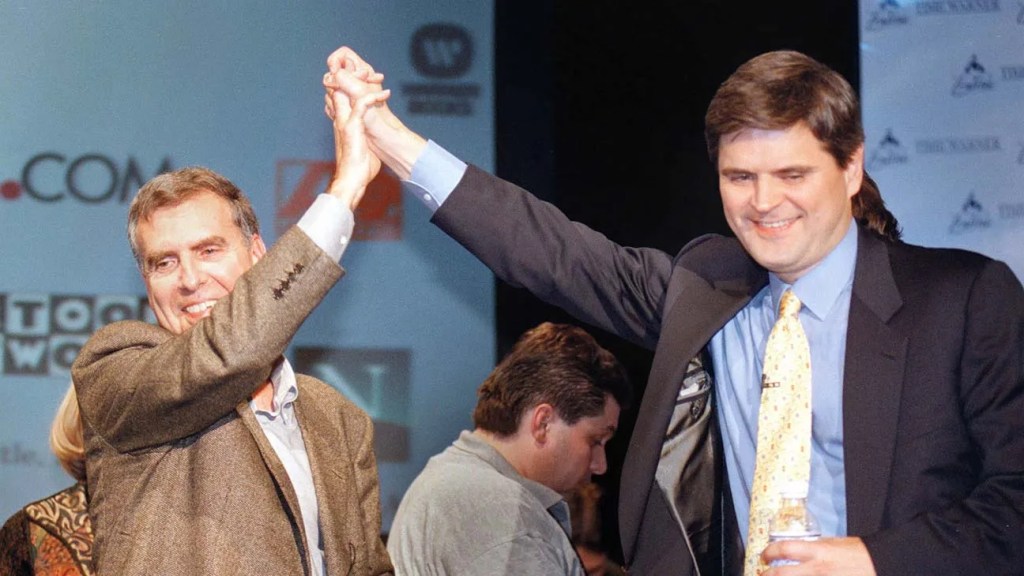
WWE now finds itself in almost the exact same position almost three years on from merging with the UFC to form TKO Group Holdings and the final exodus of Vince McMahon. Triple H, who’s been spearheading WWE’s creative direction since the middle of 2024, has found himself facing greater scrutiny from fans and critics, alike, who are frustrated with the promotion’s product in 2026. TKO executives such as Chairman and CEO Ari Emmanuel haven’t hesitated to inject their own ideas into the on-screen product. The most egregious of this in many fans eyes was Pat McAfee’s involvement in the build-up to Randy Orton vs. Cody Rhodes for the Undisputed WWE Championship at WrestleMania 42. There are also aging stars occupying the main event scene, with the youngest names involved only a year or two shy of being 40, though this seems to be due to WWE’s creative team being seemingly “gun-shy” about pushing younger talent that earlier in 2026 looked poised to move to the top of the card.
And unlike WCW, WWE appears to be under corporate leadership that actually value what professional wrestling, or the money it can make at the very least and is not likely to go under any time soon, if tall. WCW was not so lucky, especially after the AOL-Time Warner merger, as new leadership wanted to distance the corporation from professional wrestling as they didn’t believe in wrestling’s ability to generate money.
It certainly didn’t help that WCW recorded staggering losses in 1999 and 2000 after turning profits in 1997 and 1998, usurping WWF as the top wrestling promotion in the world.
WWE now appears to be suffering from many of the same problems that plagued WCW’s product in those final two and a half years, with The Bloodline being emblematic of those issues the same way the nWo was. A group that, at their peak, made their respective companies the hottest promotion in the world to bogging down the main event scene and, as a side effect, the rest of the card due to how its making upward movement harder for younger and newer names.
The silver-lining is WWE doesn’t appear to be anywhere near in danger of going under the way WCW, with the promotion more likely to be sold to another corporate entity than shut down. It is not able to avoid the inevitable downturn, as most wrestling promotions go through hot and cold periods. But much like how trying to refresh the nWo did nothing for WCW’s business, it appears The Bloodline has finally reached that same point.
 Minimum Wage Nerd