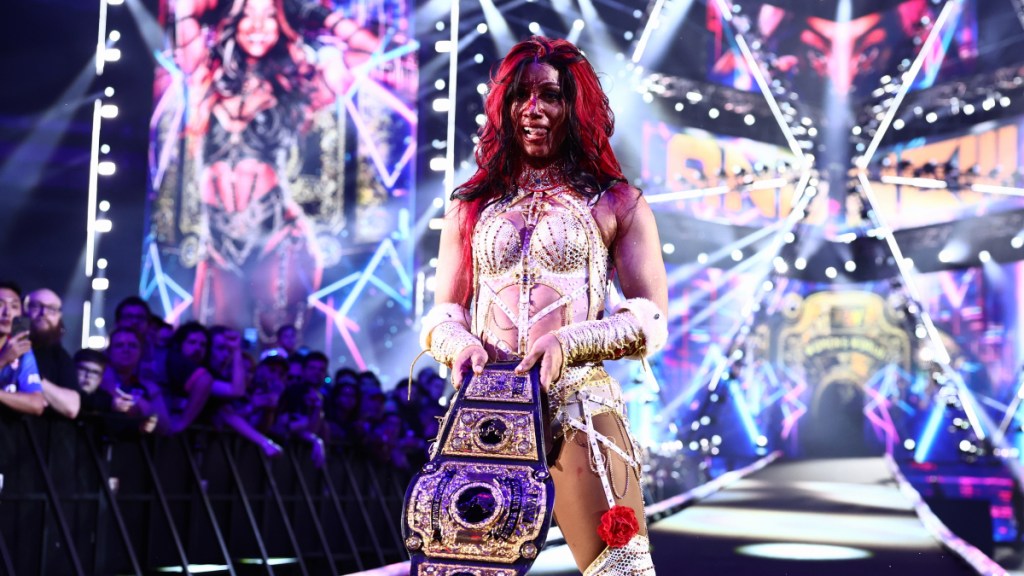
So AEW’s Women’s Division has had an…..
Lets say interesting history to say the least.
Since All Elite Wrestling became a reality in 2019, the promotion has struggled to build any kind of consistent momentum within the women’s division. It hasn’t been for a lack of talent with names like Britt Baker, Thunder Rosa, Toni Storm, Mercedes Mone, Kris Statlander, Jamie Hayter, Thekla, Athena, and many more making up the division.
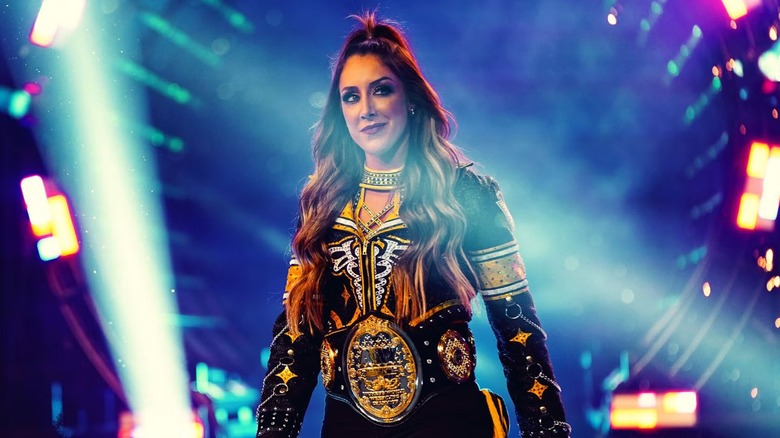
The talent hasn’t always translated to consistent TV time, unfortunately, and is something AEW President Tony Khan continues to be criticized on in 2026, and for good reason.
Now it isn’t to say its all on Khan and AEW’s booking team. But to understand that, one has to understand the pro wrestling landscape, especially the indies, around the time AEW was coming together.
Early Days of Elite
WWE had, for all intents and purposes, a monopoly on the wrestling industry for almost 20 years following the sale of WCW in 2001. While companies like TNA would try to make runs at WWE’s success or Ring of Honor would help lay the foundation for modern pro wrestling. WWE remained the only internationally broadcast promotion wrestlers could hope to get to and become stars.
By the late-2010s, that grip was beginning to wane thanks to years of poor creative on the part of Vince McMahon and general malaise with the WWE product. The independent scenes in the U.S. and the U.K. were white hot, New Japan was making in-roads into the U.S., and there was a wealth of talent available.
It was this talent WWE immediately began signing as NXT was picking up steam, but also because it had caught wind of another promotion in the works that might make it on to national TV and could afford to match, or even out-bid, WWE on talent pay.
On the men’s side, WWE picked up a large swath of names but there was still simply too many out there to prevent All Elite Wrestling from signing a strong foundational roster, which it did.
The women’s side of things was a different story.
Women’s wrestling in the U.S. has had a checkered history, to say the least. In the modern context, women’s wrestling really didn’t start to get any real meaningful attention in the U.S. until the early 2000s. Promotions like Shimmer and the TNA Knockouts Division would become spotlights for the talented women coming up on the independent scene.
Plenty of women such as Mickie James, Awesome Kong, Mercedes Martinez, and Gail Kim, among others, would enjoy varying degrees of success in this time period, but the overall number of notable women’s wrestlers outside of WWE never came close to the number of standout men’s independent wrestlers.
It began to change in the 2010s, with the back-half especially seeing an explosion in the popularity of women’s wrestling. The pool of talent had also grown considerably, but still was no where close to the amount of men’s names at the time. This made it much easier for WWE to deprive AEW of a swath of names who either had TV experience or were considered TV ready when AEW signed that initial wave of talent.
Instead, AEW was going to have to rely on names the promotion thought had potential and pretty much build them on TV over the long-term. The saving grace in the short term would be AEW’s partnership with Tokyo Joshi Pro-Wrestling, the number two Joshi promotion in Japan behind Stardom. AEW would fly in more experienced Joshi to anchor the short term.
Cut to March 2020.
The world has shut down as a result of the COVID-19 pandemic. Everyone, save for anyone working in public safety and services deemed necessary, was home and told to avoid going out unless necessary and to wear a mask to try and prevent possible exposure.
Professional wrestling was able to remain active thanks to be deemed a “necessary service” in Florida, giving AEW and WWE a place to continue running. For AEW, though, it meant that initial anchor in the Joshi was no longer available due to travel restrictions.
All AEW had left was a collection of names who were talented, but had been learning how to work TV as they went since signing with the fledgling company. It was this early crop that gave fans Britt Baker, Nyla Rose, and Kris Statlander, who are still with AEW in 2026.
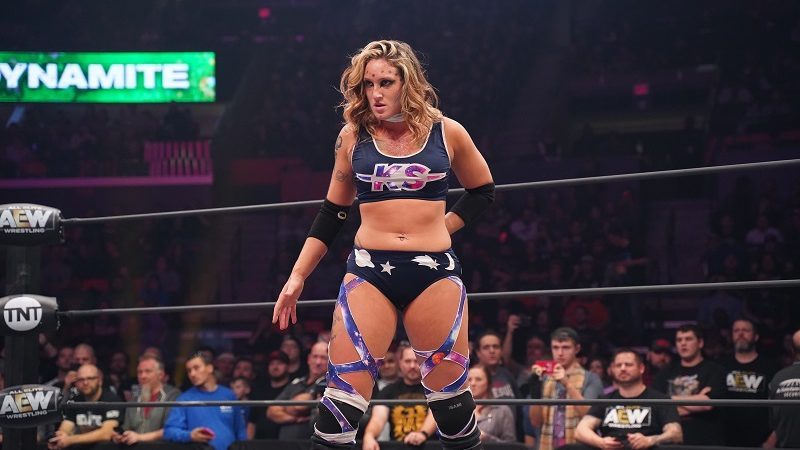
That said, hindsight shows AEW was in a tough position for those first two years with the women’s division. It didn’t mean brighter days ahead for the division, unfortunately, as it continued to struggle with momentum and TV time in the following years. For all the talent, it didn’t feel like there was a clear idea of what the division was supposed to be or how to present it.
A Clearer Vision
Then 2025 rolled around.
It was not clear at the time, but something seemed to start clicking with AEW’s women’s division, or at the very least with the roster. There is something consistent in the style of wrestler AEW has been signing to the women’s division since January 2019, something that has slowly become more evident on the TV product.
In 2025, AEW added Thekla, Alex Windsor, Hyan, Maya World, Megan Bayne, Mina Shirakawa, and Lacey Lane to the division. They would be followed in 2026 by Persephone, Zayda Steel, Lena Kross, Dani Luna, VertVixen, Janai Kai, the Iinspiration, and reportedly Mara Sade, though AEW has not confirmed if she’s signed as of Oct. 12, 2026.
Additionally, Kairi has reportedly been in talks with AEW, with it widely believed she will likely sign. And with two full months left in 2026, there could still be more names.
Compared to previous years, 2025 and 2026 have been extremely strong years with multiple, notable women signed by AEW. More importantly, all the names feel like they fit specifically with a company noted for strong in-ring. Persephone has been viewed as a prodigy out of Mexico, calling AAA home before taking up residence with CMLL. Dani Luna is known for her hard-hitting matches involving plenty of hard-strikes and suplexes. And names like Hyan, Maya World, and Janai Kai have been standouts on the independent scene for the last few years.
It’s helped that many of the long-term signings by AEW they committed to have come in to their own. Julia Hart has seen a boon to her in-ring work thanks to recent tours of Stardom while Skye Blue has become a favorite at Pro Wrestling Eve in the U.K. for her violent, bloody matches.
But more importantly, they all feel like they fit in a division that has actual vision to it. Even an act like the Iinspiration, who have never been known for their in-ring acumen, fit in a similar way to the Outrunners on the men’s roster.
AEW has also been able to leverage its partnerships with CMLL and Stardom in this time as many of the women in both companies have experience on large stages and TV.
There is still plenty of work to do, though,
The division still struggles to maintain consistent TV time beyond one, maybe two back-to-back segments on Dynamite and the talent rotation isn’t always consistent. More often then not, injuries have been the main motivator for AEW elevating new names.
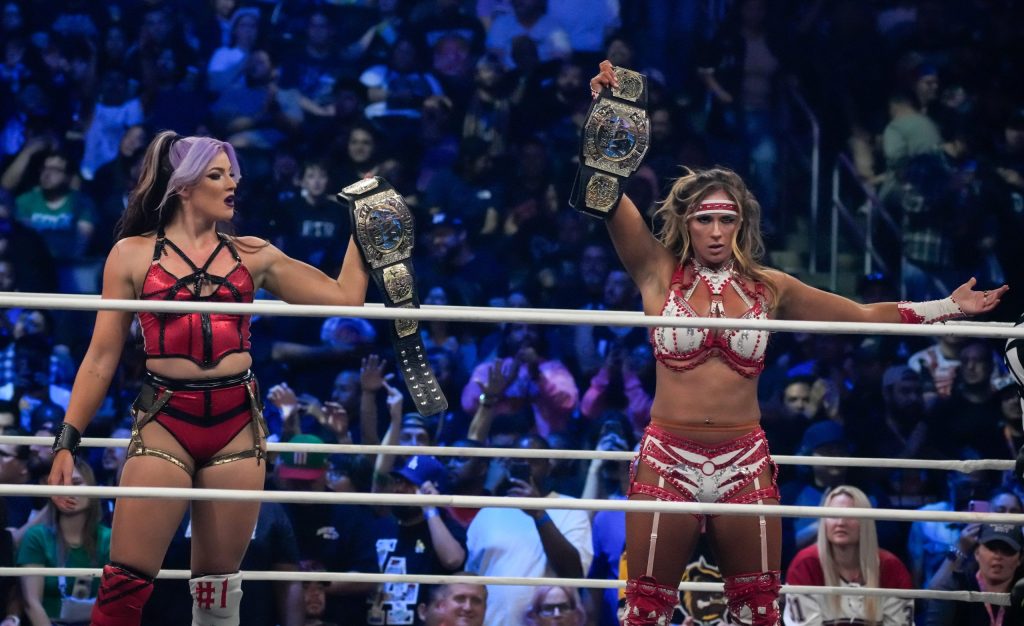
It also needs greater overall depth with the additions of the AEW Women’s World Tag Team Championships and the Ring of Honor Women’s Pure Championship in the last year. Unlike 2019, though, there is a much larger pool of talent for AEW to scout between the U.S. indies and international markets so AEW can’t fall victim to the problems it did due to WWE stockpiling talent.
That said, if the promotion can keep things moving in the right direction, fans could be treated to what would be the best women’s division in North America.

