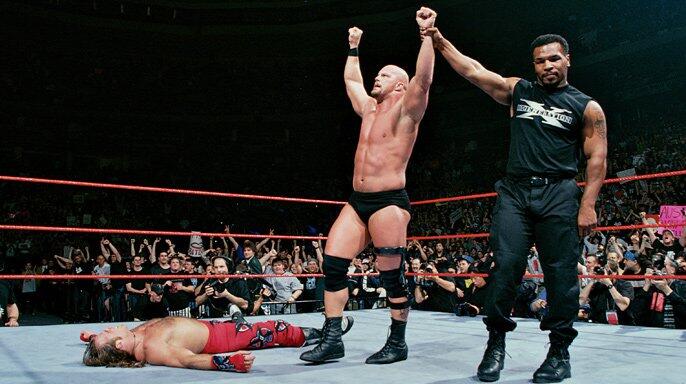
To say the last week of WWE PR has been chaotic would be a massive understatement.
The reveal of Pat McAfee as the mystery caller to Randy Orton was met with a collective “huh?” from viewers in attendance and watching live on TV. His promo that followed only confused audiences further by bringing up things like the drop in WrestleMania ticket sales from 2025 and recent ratings low SmackDown had hit. It spiraled further when McAfee began talking about the Attitude Era, fans who felt left behind, and the role Randy Orton will play in “saving the business.”
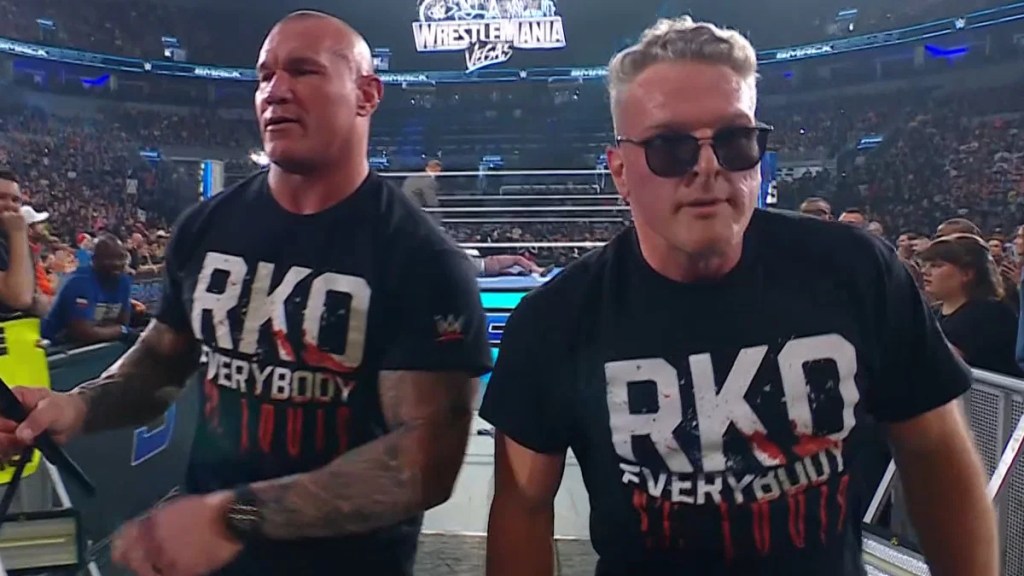
It was, all in all, a bizarre and poorly-received reveal that was only made more confusing by Cody Rhodes promo to close out the same SmackDown, taking aim at McAfee and even TKO.
McAfee continued stoking the flames on his show, continuing to wax-poetic on the Attitude Era with his co-hosts and asking for the return of stars like The Rock or ‘Stone Cold’ Steve Austin. Suddenly, a match with almost 20 years of history to pull from has become a strange, celebrity-driven amalgamation about WWE’s recent decline and bringing back the Attitude Era.
Having CM Punk bring this up during his own promo on the following Monday Night Raw doesn’t help, either.
On top of all this, two of WWE 2K26’s special editions were Attitude Era and Monday Night Wars-inspired as WWE approaches 30 years since that massive boom period.
And there in lies the very thing – it has been almost 30 years since the Attitude Era and WWE still cannot get past it.
Now, professional wrestling is very nostalgia-driven at times and it can be seen in many promotions. Adam Copeland and Christian Cage are slated to challenge for the AEW World Tag Team Championships at AEW Dynasty and there is even fan-speculation of them defending the titles in a TLC-style match at AEW All In to pseudo-celebrate the 25th anniversary of TLC 2 at WrestleMania 17. In WWE, CM Punk is going in to WrestleMania as WWE World Heavyweight Champion. New Japan got in an it too with 2026’s Wrestle Kingdom, which was centered on the retirement match for Hiroshi Tanahashi, the wrestler largely-credited for saving New Japan in the mid-2000s.
And fans can find plenty of past stars at conventions or wrestling events all over the world on any given week so they can get an autograph or a picture.
It is like any other form of entertainment where fans love to celebrate the past, but not at the cost of the current and future.
That said, it always feels different when it comes to the Attitude Era especially when it comes to how some hardcore fans of the era, and even WWE at times, discuss it.
The Era, Itself
In fairness to WWE, it is somewhat understandable why the Attitude Era is regarded so fondly.
The company was going through one of its lowest business and creative periods in history. The early-90s were not kind after the explosion in national popularity in the mid to late-80s. As the company transitioned into the 90s, the popularity of Hulk Hogan was beginning to dip after years as the then-WWF’s top star. On top of that, it was hit with a barrage of legal battles from the Ring Boy Scandal to the steroid scandal that could have sent Vince McMahon to prison.
WWF was able to cultivate a collection of stars to keep things afloat inside the ring including Bret Hart, Shawn Michaels, The Undertaker, Diesel, Razor Ramon, The British Bulldog, and Owen Hart.
The promotion still suffered from a significantly depleted roster, though, due to the downturn in business and much of the card was a rotating door of names or failed gimmicks. Creative was in an even worst state, with the overall product often compared to Saturday morning cartoons.
Things got worse with the launch of WCW Monday Nitro, running head-to-head with Monday Night Raw with names like Hogan, Randy Savage, Sting, and Ric Flair leading the company. WCW began snatching away talent like Kevin Nash and Scott Hall shortly after, kickstarting the nWo and making WCW the top promotion in the world.
As the decade went on, things needed to change in WWF if it was going to survive. The first glimpses of what would come was seen in the feud between Shawn Michaels and Bret Hart, where glimmers of the two’s backstage growing animosity began shining through.
The arrival Mankind and The Ringmaster would also prove instrumental, with Mick Foley making an immediate splash as the crazed Mankind fresh off his ECW run. As for The Ringmaster, it would take a couple of months for him to find his footing and when he did, ‘Stone Cold’ Steve Austin was born and he was off to the races.
Brert Hart’s heel turn, the rise of D-Generation X and The Nation of Domination, the Montreal Screwjob, and so much more all coalesced into what became known as the Attitude Era. Until the first half of 2001, the WWF experienced its biggest period of success to that point and created an group of era defining stars, many of whom are still active in 2026.
The Rock and Triple H, who were perpetual rivals for the entire Attitude Era, continue to play important roles in WWE, as well.
WWE’s merger with the UFC to create TKO Group Holdings and the departure of Vince McMahon saw the two Attitude Era stars rise to even higher positions behind the scenes. Triple H effectively took over from McMahon as the head of WWE’s creative efforts while Rock joined TKO’s Board of Directors.
At the Cost of Today
The impact of the Attitude Era cannot be understated as it effectively shaped the state of the wrestling industry for the next 20 years. WWE dominated professional wrestling as the only major national company, though other companies like TNA and Ring of Honor would emerge to provide places for wrestlers to work outside of the WWE-level spotlight.
With the start of AEW in 2019, wrestlers had a second company that provided another national TV company to make a full-time living, though WWE has remained the clear number one company in the industry.
WWE would go through plenty of highs and lows over the following 20 years, from another decline in popularity to doing the best business it ever has starting around 2019. The latter, in particular, would be a massive boom in business thanks to a slew of massive media rights deals, the financial beneficial but often criticized dealings with Saudi Arabia, and another boom in popularity on the backs of The Bloodline and a returning Cody Rhodes, among other reasons.
Despite this, there was always this talk from some fans, sometimes stoked by WWE, that the promotion needs to return to the Attitude Era. Not in the sense of listening to the audience, but quite literally the style of product that the Attitude Era was.
What they fail to realize is that the Attitude Era can’t be repeated, and in some respects shouldn’t for many of the same reasons.
The Attitude Era was a product of its time and the state of WWF. The period propelled itself on the back of shock TV and breaking long-held conventions within the industry. It was fresh and there was no hesitation to push the bar further and further to elicit a reaction.
While it did produce plenty of memorable moments, it also produced TV that does not hold up with the benefit of hindsight. The treatment of women, LGTBQ+, and people of color especially don’t hold up to modern scrutiny, with storylines involving date-rape and black-face making TV. And then there were groups like Kai En Tai that was outright racist with how it depicted the group of talented Japanese wrestlers.
The argument of “its a product of its time” doesn’t even hold up against some of the worst the period produced.
And then there’s the fact demanding this type of product come back is a slap in the face to everyone working in wrestling today.
The modern wrestling landscape is, arguably, the healthiest it has been in decades. Two national companies stand in the U.S. with plenty of other promotions of varying sizes under WWE and AEW, from TNA to GCW and all the various indies dotting the country. Internationally, wrestling has more exposure than it ever has thanks to the internet and resulted in promotions such as CMLL, AAA, RevPro, Noah, New Japan, and Stardom to gain new eyes on the wealth of talent around the world making the most of their newfound exposure.
Even with WWE cooling off as dramatically as it has, it is still a clear number one with perhaps the greatest wealth of talent in company history. It is more accessible, though at a cost, than ever before and is now a globally recognized brand with cities now bidding for events.
And it all happens the further away from the Attitude Era that WWE gets.
Yes, the Attitude Era was the springboard to today and is worth remembering, but nothing more. It is a period that can be studied for the good and bad TV it produced to its lasting impact on the whole industry.
But there is no need to go back to any of that.
Instead, fans need to remember that the past belongs in the past and to appreciate the now, especially with how far the industry has come and how much further it could go.
 Minimum Wage Nerd