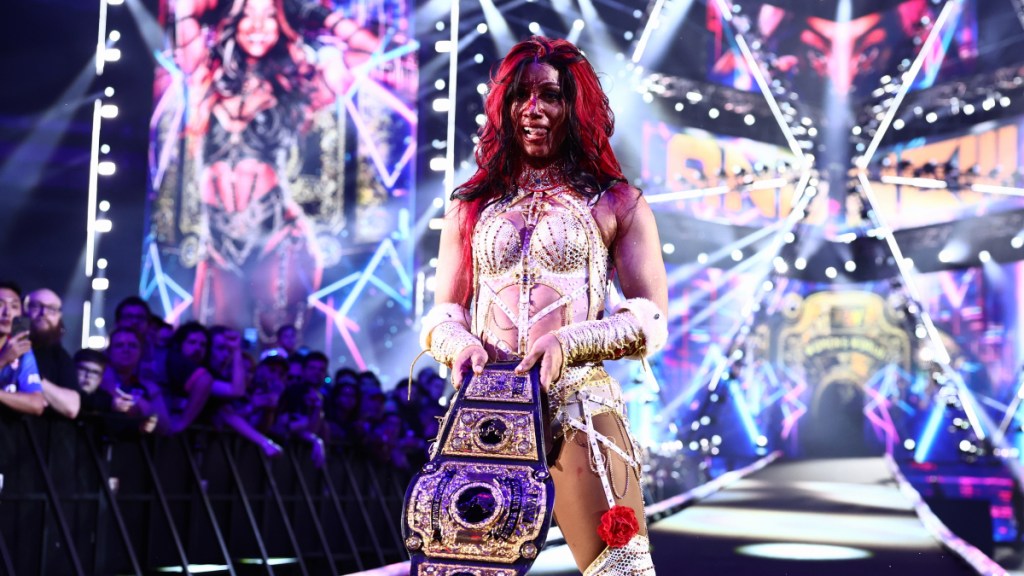
• TNA Wrestling Will Always Be Its Own Worst Enemy

    For almost 25 years, TNA Wrestling has managed to survive despite being such a snake-bit company from the very start.

    It began with the Jarretts almost shutting down NWA: TNA after only a few months due to dwindling finances before being saved by Panda Energy. From there, it would be a long series of ups and downs as TNA tried to find its footing on TV and bring in big name free agents like Sting, Kurt Angle, Booker T, Jeff Hardy, and others. The company would have its best financial year in 2009, finally turning a profit, only for things to crater over the next few years.

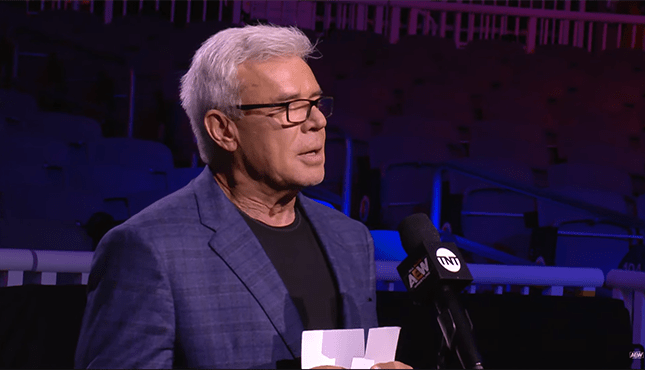
    The signings of Hulk Hogan and Eric Bischoff to be major on-screen characters and effectively drive the show’s creative direction backstage is where things began to turn. Their signings emboldened TNA to move its flagship show Impact from Thursdays to Mondays and challenge Monday Night Raw directly in the hopes of sparking a new wrestling war, akin to WWF and WCW in the 90s.

    This did not happen.

    TNA Impact was beaten so badly in the ratings that the show moved back to Thursdays after only a few weeks. Things spiraled further with the signings of aged-stars like Scott Hall and The Nasty Boys, rehashing the New World Order and Four Horsemen in the laziest ways possible, damaging the Knockouts and X-Divisions so badly it took years for both to recover, and so much more.

    It all seemed to coalesce in a show where then-TNA President Dixie Carter, who was also the show’s top heel at the time, infamously clutched to Hulk Hogan’s leg on Hogan’s final episode of Impact before his departure. Many felt this was “art imitating life” a little too accurately.

    TNA would continue to hobble along from there. It got booted off Spike after it was revealed Vince Russo had been offering input into the show’s creative “off-the-books,” and the network had made it clear it was happy to keep Impact on the channel as long as Russo wasn’t involved in the show.

    It hopped around from random low-level networks like Destination: America and POP! for years after that. Billie Corgan would come in briefly to try and help with the company, but this would end in a lawsuit by Corgan against TNA claiming he was lied to about his return on investment into the promotion.

    Things would start to look up when Anthem Sports & Entertainment purchased the majority ownership in the promotion in 2017, changing the name from TNA Wrestling to Impact Wrestling. It would also partner with Jeff Jarrett’s new promotion, Global Force Wrestling, before Anthem cut ties with Jarrett after only a couple of months and a planned-acquisition of GFW by Anthem didn’t happen.

    Former-TNA talents Scott D’Amore and Don Callis would be brought on as executive vice presidents of Impact and effectively run the promotion. The show began airing on AXS, which Anthem had recently purchased as well, along with streaming platform Twitch. It would put together a talented roster including names like the Lucha Bros, LAX, Brian Cage, Steve Maclin, Taya Valkyrie, The Rascalz, Rosemary, Tasha Steelz, Deonna Purrazzo, Jordynne Grace, and many others. The overall creative was looking up and the promotion was on seemingly stable footing, enough that it made through the COVID-19 pandemic and really started gaining momentum.

    Don Callis would ultimately depart for AEW, leaving D’Amore as the “top dog” backstage at Impact.

    During and shortly after the pandemic, Impact would have a partnership with AEW that saw Kenny Omega win and hold the Impact World Championship for a brief period.

    By the end of 2023, it was announced Impact would be reviving the TNA Wrestling name in January 2024. It then held its first pay-per-view back under the TNA Wrestling name, Hard to Kill, which was a widely praised show and the most successful pay-per-view to that point in company history. This was followed by one of the most universally praised episodes of Impact in history.

    It would also begin a partnership with WWE at the same time as the rebrand, with then-Knockouts Champion Jordynne Grace appearing as a surprise entrant in the 2024 Women’s Royal Rumble.

    However, things began shifting for the worse again only a month into 2024 when D’Amore was suddenly let go by Anthem at the start of February. He was replaced by Anthony Cicione, President of Entertainment at Anthem. Cicione resigned as President of TNA only a year later, with Carlos Silva taking over for Cicione.

    While a clear picture of what happened will likely never be put together, it is known at this time D’Amore had overtures to purchase TNA from Anthem.

    The next two-years, TNA continued along on AXS and worked primarily with WWE’s developmental brand, NXT, as part of the promotions’ partnership. It would put on two of its most successful shows ever, Slammiversary 2025 and Bound For Glory 2025, and land a TV deal with AMC, a deal many fans theorize WWE played a role in helping TNA land in hopes TNA could draw viewers away from AEW.

    However, the promotion would slowly start to lose talent as Jordynne Grace and Joe Hendry would sign with WWE while Josh Alexander, Speedball Mike Bailey, and Deonna Purrazzo left for AEW. Others like Alex Hammerstone and Gisele Shaw left to work a variety of promotions, from returning to MLW for Hammerstone to Gisele Shaw rejoining her old boss D’Amore for the relaunch of Maple Leaf Pro Wrestling.

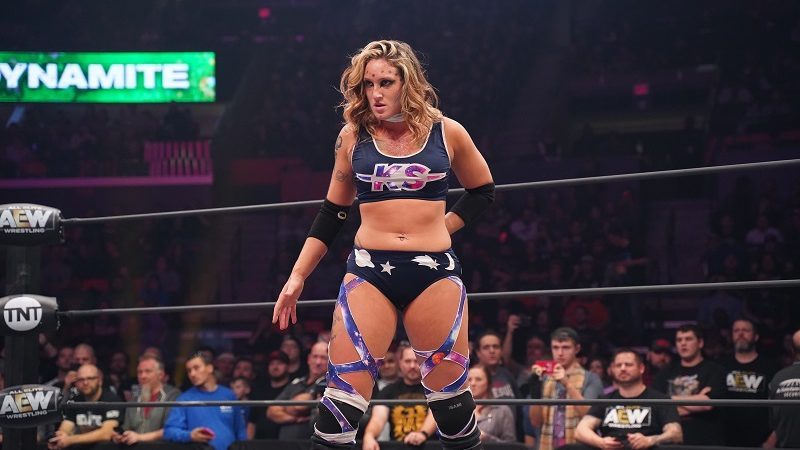
    It suffered another exodus at the end of 2025 as Ace Austin, Jake Something, Killer Kelly, and The Rascalz would all depart, with all save for Kelly signing with AEW. Trey Miguel, however, would find himself back in TNA in short order after Warner Bros Discovery nixed his signing due to old, homophobic posts on Twitter, despite Miguel already apologizing for those posts years earlier.

    And then Impact premiered on AMC, which appeared to go as poorly as it possibly could have. The show was panned for what many felt was poor creative, questionable production choices, confusing cameos, and all notable debuts being former-WWE names.

    It drew comparisons to a Hogan and Bischoff era Impact in all the wrong ways.

    Questions about how much of an actual “partnership” continued to arise during this time, too, as NXT talents would hold TNA’s top two titles and the only NXT talent that ever seem to appear on Impact are lower-card talent.

    And that brings us to today, April 10, 2026

    You may be asking why the long-winded history lesson?

    It is to provide a clear image of the luck, or lack of it really, that TNA has always suffered from, made worse by the fact many of their biggest wounds are self-inflicted. And this continues to be the case in two big pieces of recent news.

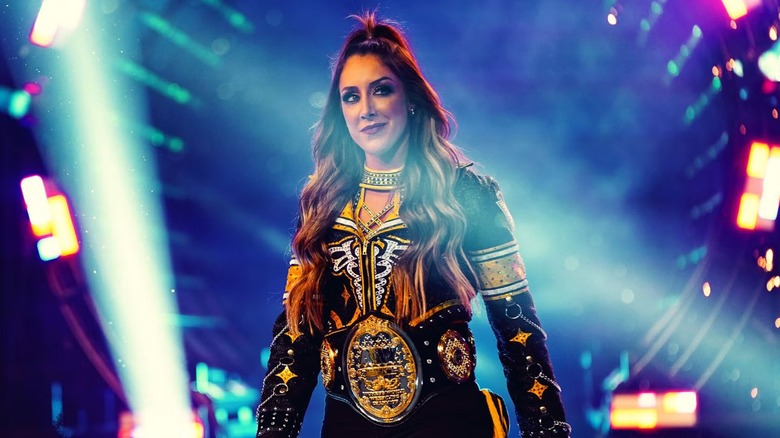
    The one-two punch started with news that Dani Luna had her request for her release from TNA granted. It was met with a collective shock from fans as it seemed like Luna had been positioned to be the next top star in the Knockouts Division. She was expected to win the title at Genesis 2026, but due to sudden travel-issues, she missed the show and wouldn’t return to TV for several weeks. She then lost a three-way match for the Knockouts Title to NXT talent Arianna Grace at Sacrifice on March 27, 2026.

    Filmed her final match with TNA at the following day’s tapings, losing her match to Jada Stone that aired about two weeks later on April 10.

    The second “punch” hit even harder as suddenly, multiple matches announced for WrestleMania week featuring an AEW talent vs. a TNA talent were cancelled as TNA pulled their talent from the matches. Moose was reportedly slated to wrestle on the MLP Multiverse show, Nick Nemeth vs. MJF at an upcoming Create-A-Pro show, an unannounced MJF vs. Bear Bronson match at GCW, and Leon Slater vs. Ricochet at the 2026 Mark Hitchcock Memorial Supershow was cancelled.

    Slater vs. Ricochet and Nemeth vs. MJF were the two highest-profile cancellations.

    TNA immediately found itself in fans and pundits crosshairs for what many felt was a petty move by TNA and Silva that benefitted no one and only hurt their own talent. It only got worse as more came out about why the cancellations happened, including “partner conflicts” and alleged anger over AEW Collision being moved from Saturday to Thursday due to the NCAA Final Four.

    It was noted, however, that was a Warner Bros. Discovery decision and not an AEW one, as the promotion reportedly wanted to stay on Saturday and air after the College Finals because of the viewership overrun.

    Even if AMC and WWE had some input into it, the onus from pulling the talent falls solely on TNA for a universally-panned decision. This has led to speculation that TNA could suffer another talent exodus because of this due to how many people are effectively working on per-appearance deals and not making much money, relatively speaking, especially compared to the small handful of salaried talent like Moose.

    Speaking for myself, both of these are massive black eyes on current TNA management and their running of the promotion.

    Dani Luna seems bound for superstardom and being able to capitalize on that potential ahead of anyone else would have been huge. Luna could have been the new face of the Knockouts Division, taking a spot once held by names like Gail Kim, Awesome Kong, Deonna Purrazzo, Mickie James, and Jordynne Grace. Instead, it seems as though she feels her time and efforts in pro wrestling are put to better use focusing solely on the independent scene over staying with TNA.

    The general belief is she will spend as long as she wants to on the indies, but there is already many fans sharing their hope she gets signed sooner rather than later.

    As for pulling the talent, what can I add that hasn’t been brought up by everyone else. It is a stupid, petty choice made for what may allegedly be even dumber and pettier reasons. While Moose appears to be a TNA life and Nemeth doesn’t seem to be going anywhere, current X-Division Champion Leon Slater is widely-seen as the next big young free agent set to hit the market in 2026.

    At only 21-years-old, English-born Slater has become a sensation in professional wrestling between his time in TNA and work on the UK and US independent scenes. He has already made appearances on NXT and even tagged with NXT star Je’Von Evans for John Cena’s retirement show at Saturday Night’s Main Event XLII. He also knows several of AEW’s top stars, most notably Will Ospreay who Slater said previously he spent plenty of time and learning from on the independents.

    He has connections everywhere and is going to be in very high demand, meaning he is likely leaving TNA before the end of the year. Any hope of possibly retaining him is only hurt by a decision like this to pull him from his match against Ricochet, a match said to be an actual dream match for Slater.

    And then there’s the harm this does for TNA’s relationships with independent promotions and make them hesitant to book TNA-contracted talent. GCW Owner Brett Lauderdale and AEW coach and Create-A-Pro co-owner Pat Buck are just two of the people to speak on this, saying how TNA is only damaging itself with decisions like this.

    These might be the two most devastating self-inflicted wounds TNA has suffered since the departures of AJ Styles and Samoa Joe in 2014 and 2015, respectively. The two were widely seen by fans as top “homegrown” names in TNA and losing them was perceived as two massive black eyes on the promotion.

    But it now seems to be “par for the course” for TNA, it seems, and it doesn’t appear to be changing any time soon. No matter how many times TNA tries to get trending in a good direction, it always seems to fall victim to the same “LOLTNA” reaction from fans at this point because, well, its just what TNA does.

    It will continue on as it has, with TNA somehow managing to scrape by until it experiences a brief upswing one again, only for some self-inflicted wound to not only bring TNA back to Earth, but somehow crater the promotion again. TNA will get lucky finding potential marquee talent before anyone else, like Leon Slater and more recently Dutch-born Belgian wrestler Ricky Sosa, and giving them a platform to get their name out there before leaving to one of the bigger promotions.

    The only question is what will TNA do to seriously harm itself the next time?

  • WWE and the Attitude Era – Please Leave it in the Past

    To say the last week of WWE PR has been chaotic would be a massive understatement.

    The reveal of Pat McAfee as the mystery caller to Randy Orton was met with a collective “huh?” from viewers in attendance and watching live on TV. His promo that followed only confused audiences further by bringing up things like the drop in WrestleMania ticket sales from 2025 and recent ratings low SmackDown had hit. It spiraled further when McAfee began talking about the Attitude Era, fans who felt left behind, and the role Randy Orton will play in “saving the business.”

    It was, all in all, a bizarre and poorly-received reveal that was only made more confusing by Cody Rhodes promo to close out the same SmackDown, taking aim at McAfee and even TKO.

    McAfee continued stoking the flames on his show, continuing to wax-poetic on the Attitude Era with his co-hosts and asking for the return of stars like The Rock or ‘Stone Cold’ Steve Austin. Suddenly, a match with almost 20 years of history to pull from has become a strange, celebrity-driven amalgamation about WWE’s recent decline and bringing back the Attitude Era.

    Having CM Punk bring this up during his own promo on the following Monday Night Raw doesn’t help, either.

    On top of all this, two of WWE 2K26’s special editions were Attitude Era and Monday Night Wars-inspired as WWE approaches 30 years since that massive boom period.

    And there in lies the very thing – it has been almost 30 years since the Attitude Era and WWE still cannot get past it.

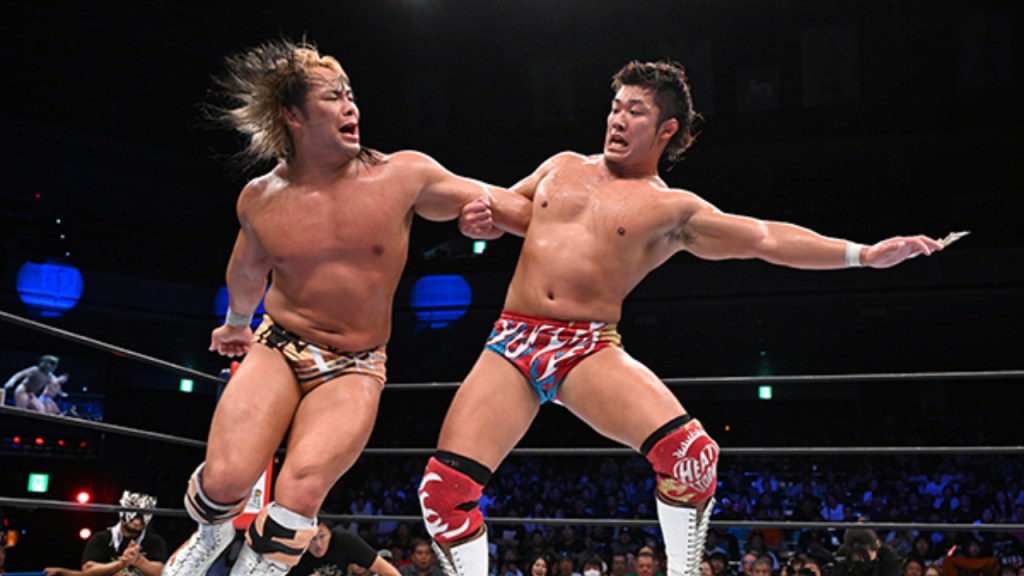
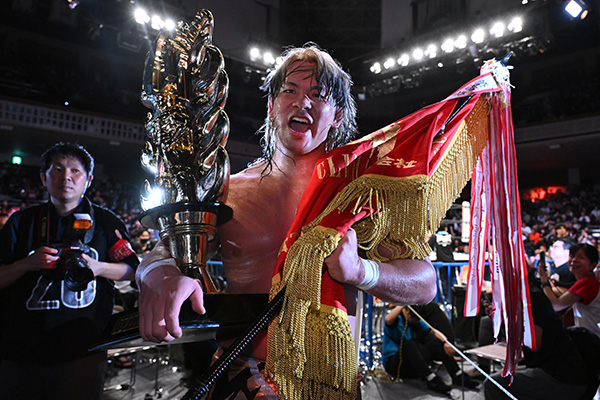
    Now, professional wrestling is very nostalgia-driven at times and it can be seen in many promotions. Adam Copeland and Christian Cage are slated to challenge for the AEW World Tag Team Championships at AEW Dynasty and there is even fan-speculation of them defending the titles in a TLC-style match at AEW All In to pseudo-celebrate the 25th anniversary of TLC 2 at WrestleMania 17. In WWE, CM Punk is going in to WrestleMania as WWE World Heavyweight Champion. New Japan got in an it too with 2026’s Wrestle Kingdom, which was centered on the retirement match for Hiroshi Tanahashi, the wrestler largely-credited for saving New Japan in the mid-2000s.

    And fans can find plenty of past stars at conventions or wrestling events all over the world on any given week so they can get an autograph or a picture.

    It is like any other form of entertainment where fans love to celebrate the past, but not at the cost of the current and future.

    That said, it always feels different when it comes to the Attitude Era especially when it comes to how some hardcore fans of the era, and even WWE at times, discuss it.

    The Era, Itself

    In fairness to WWE, it is somewhat understandable why the Attitude Era is regarded so fondly.

    The company was going through one of its lowest business and creative periods in history. The early-90s were not kind after the explosion in national popularity in the mid to late-80s. As the company transitioned into the 90s, the popularity of Hulk Hogan was beginning to dip after years as the then-WWF’s top star. On top of that, it was hit with a barrage of legal battles from the Ring Boy Scandal to the steroid scandal that could have sent Vince McMahon to prison.

    WWF was able to cultivate a collection of stars to keep things afloat inside the ring including Bret Hart, Shawn Michaels, The Undertaker, Diesel, Razor Ramon, The British Bulldog, and Owen Hart.

    The promotion still suffered from a significantly depleted roster, though, due to the downturn in business and much of the card was a rotating door of names or failed gimmicks. Creative was in an even worst state, with the overall product often compared to Saturday morning cartoons.

    Things got worse with the launch of WCW Monday Nitro, running head-to-head with Monday Night Raw with names like Hogan, Randy Savage, Sting, and Ric Flair leading the company. WCW began snatching away talent like Kevin Nash and Scott Hall shortly after, kickstarting the nWo and making WCW the top promotion in the world.

    As the decade went on, things needed to change in WWF if it was going to survive. The first glimpses of what would come was seen in the feud between Shawn Michaels and Bret Hart, where glimmers of the two’s backstage growing animosity began shining through.

    The arrival Mankind and The Ringmaster would also prove instrumental, with Mick Foley making an immediate splash as the crazed Mankind fresh off his ECW run. As for The Ringmaster, it would take a couple of months for him to find his footing and when he did, ‘Stone Cold’ Steve Austin was born and he was off to the races.

    Brert Hart’s heel turn, the rise of D-Generation X and The Nation of Domination, the Montreal Screwjob, and so much more all coalesced into what became known as the Attitude Era. Until the first half of 2001, the WWF experienced its biggest period of success to that point and created an group of era defining stars, many of whom are still active in 2026.

    The Rock and Triple H, who were perpetual rivals for the entire Attitude Era, continue to play important roles in WWE, as well.

    WWE’s merger with the UFC to create TKO Group Holdings and the departure of Vince McMahon saw the two Attitude Era stars rise to even higher positions behind the scenes. Triple H effectively took over from McMahon as the head of WWE’s creative efforts while Rock joined TKO’s Board of Directors.

    At the Cost of Today

    The impact of the Attitude Era cannot be understated as it effectively shaped the state of the wrestling industry for the next 20 years. WWE dominated professional wrestling as the only major national company, though other companies like TNA and Ring of Honor would emerge to provide places for wrestlers to work outside of the WWE-level spotlight.

    With the start of AEW in 2019, wrestlers had a second company that provided another national TV company to make a full-time living, though WWE has remained the clear number one company in the industry.

    WWE would go through plenty of highs and lows over the following 20 years, from another decline in popularity to doing the best business it ever has starting around 2019. The latter, in particular, would be a massive boom in business thanks to a slew of massive media rights deals, the financial beneficial but often criticized dealings with Saudi Arabia, and another boom in popularity on the backs of The Bloodline and a returning Cody Rhodes, among other reasons.

    Despite this, there was always this talk from some fans, sometimes stoked by WWE, that the promotion needs to return to the Attitude Era. Not in the sense of listening to the audience, but quite literally the style of product that the Attitude Era was.

    What they fail to realize is that the Attitude Era can’t be repeated, and in some respects shouldn’t for many of the same reasons.

    The Attitude Era was a product of its time and the state of WWF. The period propelled itself on the back of shock TV and breaking long-held conventions within the industry. It was fresh and there was no hesitation to push the bar further and further to elicit a reaction.

    While it did produce plenty of memorable moments, it also produced TV that does not hold up with the benefit of hindsight. The treatment of women, LGTBQ+, and people of color especially don’t hold up to modern scrutiny, with storylines involving date-rape and black-face making TV. And then there were groups like Kai En Tai that was outright racist with how it depicted the group of talented Japanese wrestlers.

    The argument of “its a product of its time” doesn’t even hold up against some of the worst the period produced.

    And then there’s the fact demanding this type of product come back is a slap in the face to everyone working in wrestling today.

    The modern wrestling landscape is, arguably, the healthiest it has been in decades. Two national companies stand in the U.S. with plenty of other promotions of varying sizes under WWE and AEW, from TNA to GCW and all the various indies dotting the country. Internationally, wrestling has more exposure than it ever has thanks to the internet and resulted in promotions such as CMLL, AAA, RevPro, Noah, New Japan, and Stardom to gain new eyes on the wealth of talent around the world making the most of their newfound exposure.

    Even with WWE cooling off as dramatically as it has, it is still a clear number one with perhaps the greatest wealth of talent in company history. It is more accessible, though at a cost, than ever before and is now a globally recognized brand with cities now bidding for events.

    And it all happens the further away from the Attitude Era that WWE gets.

    Yes, the Attitude Era was the springboard to today and is worth remembering, but nothing more. It is a period that can be studied for the good and bad TV it produced to its lasting impact on the whole industry.

    But there is no need to go back to any of that.

    Instead, fans need to remember that the past belongs in the past and to appreciate the now, especially with how far the industry has come and how much further it could go.

  • The Furious and Indonesia’s unsung impact on action cinema

    In the early 2010s, two breakout action films effectively reshaped modern action cinema seemingly overnight.

    The more recognized of the two is 2014’s John Wick, starring Keanu Reeves in what became his major comeback film. Behind the camera was longtime stunt choreographer and first time feature director Chad Stahelski, who also served as Reeves stunt double for The Matrix, and Stahelski’s 87Eleven partner David Leitch serving as a principle producer.

    John Wick’s success saw Stahelski, Leitch, and several members of the 87Eleven Entertainment team to spread out in various director and producer roles.

    Leitch, himself, would go on to direct multiple films including Atomic Blonde, Deadpool 2, and Bullet Train. He eventually left 87Eleven and founded 87North Productions where he continued serving as a key producer on action films such as Violent Night and Nobody.

    Stahelski’s efforts centered primarily on building out the John Wick universe even further. He focused all his directing efforts toward the three subsequent sequels while overseeing various John Wick-spinoffs like Ballerina, The Continental, and the upcoming Caine-spinoff directed by and starring Donnie Yen.

    As for Stahelski’s next film, he is finally stepping outside the John Wick universe with the upcoming Highlander remake starring Henry Cavill.

    The impact of John Wick has never been lost on anyone.

    But what sometimes has been is the first film to cause a massive shockwave through action films in the 2010s, and that was 2011’s The Raid: Redemption.

    Directed by the Welsh-native Gareth Evans and starring a cast of experienced martial arts practitioners and former-fighters including Iko Uwais, Joe Taslim, and many others from Indonesia. While they brought a variety of styles ranging from judo to Wing Chun and various others, the common thread was all the principle actors were pencak silat practitioners.

    The Raid quickly became something of a sleeper hit within the action movie-sphere, resulting in the 2014 sequel The Raid 2. Iko Uwais and Joe Taslim, among other cast members, quickly found themselves in demand across Hollywood. Taslim would land major roles in 2013’s Fast and Furious 6 and 2021’s Mortal Kombat while Uwais split his time between the Indonesian and Hollywood action scenes.

    A few veterans of The Raid even appeared in John Wick: Chapter 3 – Parabellum in a nice crossover nod to the two franchises.

    Evans continued to spread his wings as a director and producer, as well, most notably creating the hit action TV series Gangs of London and directing the Tom Hardy-led film Havoc released on Netflix. His next project, a remake of the 1967 Takashi Nomura film A Colt Is My Passport, is reportedly in post-production but still does not have a release date listed as of March 26, 2026.

    And while 2011’s The Raid didn’t have the kind of success John Wick did, it was obvious the film made an impact on the action scene. 2012’s Dredd and 2024’s Monkey Man are just two of the many films that took clear inspiration from The Raid.

    The impact of The Raid could be seen within the industry and more dedicated action film fans, but was not able to get the kind of wider attention the Keanu Reeves-led John Wick franchise could get.

    It is because of this that it feels like the impact of The Raid has gone unnoticed by a sizeable portion of movie-goers and action fans. It seemed as if the only ones familiar with the film was either already followed action films out of the larger Southeast Asian region or stumbled across clips of the film on YouTube.

    While it didn’t prevent The Raid from having as wide an impact as it did, the first trailer for The Furious is a reminder that more attention should be given to the contributions Indonesia has made on modern action filmmaking. Taslim is slated to co-lead with Chinese action star Mo Tse in the English-language Hong Kong production that has already drawn direct comparisons to The Raid for its fast-paced, violent, and bloody action.

    The Furious premiered at the 50th Toronto International Film Festival and was met with largely positive reviews, with praise for its action and fight choreography and overall production. That said, plenty of criticism was levied at the dubbing and, in turn, the dialogue along with some of the overall scripting.

    The Furious is scheduled to have its wider theatrical release on May 29, 2026.

    When it does it theaters, it may be worth going to a nearby theater playing The Furious. It is a prime chance to show the proper appreciation for a scene that, at times, doesn’t always get the amount of thanks it likely should for how much of an impact it has had.

  • WWE WrestleMania 42 – The sad and potentially real future 2026’s WrestleMania represents

    For wrestling fans, it goes without saying that WrestleMania season is one of the biggest times of the year for the industry. WWE is on the march to its tentpole annual event while plenty of other big events take places in the weeks and month before and after WrestleMania. AEW has their pay-per-views Revolution and Dynasty in that period, New Japan has shows like Wrestling Dontaku and the CMLL co-promoted Fantastica Mania tours in Mexico and Japan, and no shortage of big shows across the independents.

    WrestleMania, however, does remain on a pedestal all its own.

    It is what makes the build, both on-screen and behind the scenes, feel so lifeless. As March 22, 2026, names like Iyo Sky, Gunther, Charlotte Flair, Drew McIntyre, and Bayley are not on the announced card and it isn’t entirely clear how they would even get on the card. According to Dave Meltzer, this is largely thanks to plans being changed multiple times since before the Royal Rumble in response to slower than expected ticket sales. The allegedly original main event was going to be Cody Rhodes vs. Roman Reigns 3 before plans shifted and it ultimately became Cody Rhodes vs. Randy Orton and CM Punk vs. Roman Reigns.

    Meltzer said on Wrestling Observer Radio that he thought this has been “the most second-guessed show,” he’d ever seen, “in the history of Mania.”

    And, unfortunately, this may very well become the norm going forward.

    DISCLAIMER

    Now before going further, I want to be upfront – I have not actively watched WWE since late 2021/early 2022. Before the Janel Grant lawsuit or who could WWE sell to, the show had just stopped being for me in the way AEW did for me on national TV. I still follow it somewhat thanks to clips and review shows, but I do not actively watch the product.

    I am saying this to make it clear I am not writing this with any malicious intent. Yes, I have my feelings on certain things, like the Saudi Arabia deal, but that is not applicable to what I am discussing. I am only speaking on how WWE’s creative efforts appear as an outside observer and the worrying signs for the future I could have missed if I was still watching regularly.

    If anything, what I am going to suggest has more in common with Hollywood and the state of some studios’ creative teams.

    “Corporatized” WrestleMania

    WrestleMania 42 is the first WrestleMania since the TKO merger to appear to be a truly “corporatized” WrestleMania, at least as it relates to the card and build.

    Vince McMahon had overseen the booking and overall creative direction of every WrestleMania from the first show through WrestleMania 39. After his second resignation from WWE in January 2024, the question became what does WWE creative look like without Vince McMahon involved in any capacity.

    WrestleMania 40 in 2024 and WrestleMania 41 in 2025 appeared to suggest things would be fine. Business was the hottest it had been since the Attitude Era as WWE’s global reach only grew. It helped that 40 had the benefit of focusing most of its attention on the climax of The Bloodline storyline and 41 being Cena’s final WrestleMania and as a heel, no less, after a surprise heel turn the month before at Elimination Chamber.

    The rest of both shows’ cards appeared to just fall in to place as it had in previous years.

    It hasn’t been the case heading in to WrestleMania 42.

    As mentioned earlier, reports suggest there has been plenty of second-guessing around the show’s card that’s been made worse by WWE’s reaction to WrestleMania’s ticket sales. The show got a notable bump in sales thanks to a surprise sale on March 16, or 3/16, for 3:16 Day in honor of ‘Stone Cold’ Steve Austin, but remains roughly 10 to 12% behind where WrestleMania 41 was at the same time in 2025.

    There seems to be a growing malaise with WWE’s product at the start of 2026 as it seems to be cooling off after a hot two or three years. Triple H, in particular, has been the focus of fan frustrations including getting loudly booed at multiple WWE post-shows such as the Royal Rumble.

    It all seems to have cascaded down into a WrestleMania 42 build that, from the outside, appears both overcomplicated and somewhat uninspired. It reads as the kind of creative decisions akin to a summer blockbuster made “by committee” where the film’s development and final result, like the WrestleMania 42 build, is overcomplicated and uninspired.

    It feels like the first truly “corporatized” WrestleMania where, like in other major businesses, things are going well as long as metrics keep going up. Now that those metrics aren’t going up at the same speed or, in some cases, even going down, it seems as though snap decisions are being made about where to take the WrestleMania card every few days with no signs of it being finalized despite the show being roughly four weeks out from the time of writing.

    And this, unfortunately, is a future that could become the norm for WWE and WrestleMania going forward.

    For all that Vince McMahon could be criticized for, and there is plenty, it was also clear the grip he had on the WrestleMania card. He would still make last-minute changes due to anything from his own whims to legitimate injuries just before the show, but it at least felt like WrestleMania had a clear direction every time.

    The TKO merger changed that as now McMahon and many of WWE’s top brass now found themselves having to answer to those above them in the corporate ladder. McMahon’s second resignation ahead of the Janel Grant lawsuit being filed also meant WWE’s creative would be under someone else’s direct control for the first time since McMahon bought the promotion from his father in 1982. That person would be Triple H, though The Rock’s surprise return and announcement he was a new, prominent member of the TKO’s Board of Directors has left a cloud over Triple H’s head as the two did not get along during the Attitude Era.

    The two appear to have buried the hatchet, though no shortage of fans have voiced their suspicions that there is still serious animosity there.

    All this only gets exacerbated by ballooning ticket prices and the general cost being a WWE viewer now entails due to how spread out their TV shows are across streaming and cable services. It reeks of the big corporate mindset where if the company isn’t growing, its dying.

    Once everything is boiled down, you are left with a true “by committee” WrestleMania build where board members and business metrics are more than ever having a direct impact.

    It is something fans may have to get used to now that WWE is a subsidiary instead of its own entity. There are more “cooks in the kitchen” at WWE now than ever before as a result of the TKO merger, especially when it comes WrestleMania which is understandable given its standing as a marquee annual event. When cities are bidding on it the way they do for the Super Bowl, plenty of people are going to want a hand in making it as big as possible.

    It also means more voices and factors taken in to account, which can lead to snap decisions like the ones reported on during the WrestleMania 42 build. Where matches are thrown out before being announced and inter-department communication begins to suffer, such as the reported frustrations from WWE’s graphics team over WrestleMania 42’s unclear direction and poor messaging from other department.

    This is the reality of corporate world and one that WWE fans may have to get used to going forward when it comes to WrestleMania season.

  • Wrestling Gems in Wrestling S**t – WCW Uncensored 1996

    Across the long history of professional wrestling, there is no shortage of great shows and great matches to go back and watch. Fans can find some of the best from WWE, WCW, AEW, NWA, AWA, ECW, and so many more online fairly easily nowadays.

    There is no shortage of bad wrestling shows, either, for a variety of reasons. It could feature talent now known to be morally reprehensible, a snake-bitten show plagued by production issues, or just being outright boring are three of the many possible reasons for a bad show.

    Despite how terrible some of these shows are, it is within those that some true gems of professional wrestling can be found.

    WCW Uncensored 1996

    It is March 1996 and the Monday Night Wars are in full swing on Monday nights. WCW Monday Nitro and WWF Monday Night Raw have been trading ratings wins for months as both promotions are experiencing transition periods. It is clear something big is on the way, but no one is sure what it could be or which company will have it.

    Until then, it is time for WCW Uncensored 1996.

    The show emanated from the Tupelo Coliseum in Tupelo, Mississippi. This is the pay-per-view that featured the infamous Doomsday Cage Match main event that pit the Mega Powers of Hulk Hogan and Randy Savage against Ric Flair, Arn Anderson, Meng, The Barbarian, Lex Luger, The Taskmaster, Z-Gangsta, and The Ultimate Solution as part of an alliance between the Four Horsemen and Dungeon of Doom.

    The Doomsday Cage was a multi-leveled steel cage where Hogan and Savage would start on the roof and have to fight their way down through two levels with multiple compartments before getting down to the ring and escaping from the cage through the ground level door. Hogan and Savage would win the match with a little help from The Booty Man, known formerly as Brutus Beefcake in WWF.

    It is widely regarded as one of the worst WCW shows of all time with one of the worst main events of all time. The Doomsday Cage Match received minus-three stars from The Wrestling Observer and has a 0.67 rating on Cagematch, while the overall show is rated at a 2.16.

    The rest of the show wasn’t much better as both Giant vs. Loch Ness and Col. Robert Parker vs. Madusa going less than five minutes. The Booty Man and Diamond Dallas Page laid a massive egg for about 16 minutes and The Road Warriors vs. Sting and Booker T was a fairly bog-standard, if somewhat messy, tag team match.

    On the whole, this is a lot of terrible professional wrestling to sit through.

    It isn’t true for the whole show, though, as two matches manage to stand out among this massive pile of garbage on this show. The funniest part is they are the opening two matches of this show, which can easily trick a fresh viewer into thinking they are in for a great time.

    And stylistically, it couldn’t be two more different types of matches.

    WCW United States Heavyweight Championship Match – Konnan(c) vs. Eddie Guerrero

    Kicking off WCW Uncensored 1996 was the WCW US Heavyweight Champion Konnan defending his title against Eddie Guerrero. The pair were still fairly fresh to WCW, both arriving as part of a wave of internationally known talent alongside names like Chris Jericho, Dean Malenko, Rey Mysterio Jr., and Psicosis among others.

    After debuting in 1988, Konnan spent the first few years of his career wrestling primarily in Mexico, though would make the odd trip to the U.S. for one-shot shows or tryouts with WCW or WWF. He would start committing more to U.S. appearances in 1992 when he was signed by the WWF. Konnan was brought in with plans to make him the infamous Max Moon character that would end up being portrayed by the wrestler Paul Diamond. Konnan would spend a few months in ECW at the end of 1995 before finding his way into WCW full-time in January 1996.

    Guerrero, meanwhile, got his start two years earlier in 1986 and, like Konnan, worked primarily in Mexico while making sporadic one-off appearances on WCW shows as an enhancement talent. He was more international than Konnan, though, as Guerrero started working for New Japan Pro-Wrestling in 1992 as Black Tiger 2. He got his biggest break in 1995 when Guerrero was brought in to work ECW from Spring and through most of Summer. Guerrero would join WCW full-time in August 1995, a few months ahead of Konnan’s WCW debut.

    This was also the only title match on the entire show.

    Going into the Uncensored match, Guerrero and Konnan had already shared the ring plenty of times as partners and opponents during their shared time in Mexico. One of their most notable periods together was as part of Los Gringos Locos in Asistencia Asesoría y Administración, or AAA for short.

    However, Uncensored 1996 was one of the first chances the two got to show what they could do on a big show when given plenty of time.

    What was clear from the start was how popular these two already were with the WCW audience. The first several minutes of this 18-minute 27-second match was marked with loud dueling chants for Konnan and Guerrero. It was reflective of how the fans had taken to all this fresh, young talent wrestling a faster, more athletic style, which was used to boost Monday Nitro’s early popularity.

    The overall match was a back-and-forth athletic contest between two of the top names to come out of Mexico at the time. Every hold by Konnan would be countered by Guerrero and vice versa until Konnan was able to use his power advantage to ground Guerrero for a bit. Guerrero would fight out, getting a flurry of offense in before getting shut down again.

    The match comes to a close when Guerrero is able to catch Konnan going to the top turnbuckle and hit him with a superplex to regain the advantage. After a couple of pin attempts, Guerrero would whip Konnan off the ropes and attempted some kind of headscissors takeover but would fall straight down and hitting Konnan in the head, while Guerrero suffered a low-blow in turn. Konnan would use this to secure the pinfall and retain the US Heavyweight Title.

    Afterward, Konnan attempted to raise Guerrero’s hand who refused because he was upset over the low-blow.

    While the ending landed a bit flat, the overall match was an example of the kind of opening matches that became the norm on WCW pay-per-views at this time. Fans knew from late-1995 until 1999 that if they purchased a WCW pay-per-view, they would be treated to fast-paced, athletic matches by this crop of fresh that would go on to become top stars for the next 30 years.

    Lord Steven Regal vs. The Belfast Bruiser

    To quote Monty Python, “and now for something completely different.”

    Following the athletic showcase to open Uncensored, Lord Steven Regal and The Belfast Bruiser, known better as Fit Finlay, would have an extremely physical, hardnosed match.

    Regal’s career began in 1983, while still in secondary school, training under English wrestling legend Marty Jones and working the shoot-circuit around Blackpool, England. He would spend most of the next decade working in the English wrestling scene and would work as an enhancement talent on multiple WWF and WCW shows during the promotions’ U.K. tours. Regal would eventually make his way into WCW full time in 1992 after catching the eye of then-WCW Executive Vice President Bill Watts. Regal would spend the first couple of years in WCW trading the World Television Championship against names including Ricky Steamboat, Brian Pillman, and Dustin Rhodes. He would then form a group dubbed The Blue Bloods, a trio of pompous, classical-style aristocrats alongside ‘Earl’ Robert Eaton and ‘Squire’ Dave Taylor and the group’s servant, Jeeves.

    Bruiser, by comparison, was still brand new to WCW at the time of this match. He spent most of his career working on the English wrestling circuit during the 70s and 80s, even working on the famed World of Sport television show against English legends such as Big Daddy, Marty Jones, and Johnny Saint. As the English scene began drying up in the late 80s and early 90s, Bruiser would end up spending the next several years working overseas, primarily in Germany, before being brought in to WCW in January 1996 and immediately going in to a feud with Regal.

    Bruiser doesn’t waste time as he whips his entrance jacket at Regal and the two proceed to pummel each other in and out of the ring for the next 17-minutes and 33-seconds. Regal, who had primarily shown off the technical side of English wrestling to this point in WCW, got to show off the more physical side of English wrestling now that he had an opponent like Bruiser. It resulted in Regal walking away from the match with a broken nose.

    Every kick or forearm seems to have some extra force behind them and every submission has some extra torque on it. It is the type of match that would feel right at home in New Japan in the late 2010s with the NEVER Openweight Championship on the line.

    The crowd, however, is not nearly as into this match as the previous. They do react at various points, but it seems like they can’t quite get into it for any extended period of time.

    Unfortunately, its the second match to have a bit of a dud ending.

    Regal and Bruiser end up back outside the ring and fight their way up the entrance way. After multiple attempts, Bruiser is able to slam Regal in to the Doomsday Cage before the pair fight back to ringside. Before they can get in, Dave Taylor and Robert Eaton run down to attack Bruiser, giving him the win via disqualification.

    It wouldn’t be the last match these two had as their feud would continue into April 1995. The pair’s last major match was a parking lot brawl on the April 29 edition of Monday Nitro. It was as physical a match as the two had to that point, with the pair making use of the cars and items left about for them to use. Regal would score the pin here, effectively ending their feud.

    The two were scheduled to tag together as part the Lethal Lottery Tag Team Tournament at Slamboree 1996 to qualify for the Battlebowl battle royale and potentially earn a WCW Heavyweight Championship match. However, Finlay would return to Europe and take time off to heal from injuries suffered in the parking lot brawl. He made his in-ring return for Catch Wrestling Association in Germany, the same promotion he worked for before going to WCW. Bruiser would ultimately find his way back to WCW in 1997 as Fit Finlay and remained there until WCW closed in 2001. WWF would bring in Finlay shortly after as a trainer until making his in-ring debut in 2004. He remained with WWF, later WWE, until he was released in 2011 and he wrapped up his career on the independents. Finaly would return to WWE shortly after and has remained as one of the more noteworthy producers backstage and a major proponent of women’s wrestling.

    Regal would continue wrestling in WCW until 1998, when he was fired for his infamous match with Goldberg on the February 9, 1998, edition of Monday Nitro. It is widely viewed as the first match to really expose Goldberg’s inexperience in the ring while Regal was accused by WCW President Eric Bischoff of making their next potential big star look bad. Regal countered by saying he did as he was instructed, that the match was supposed to be stiff and technical and that Regal left plenty of openings for Goldberg to take advantage of but couldn’t. Goldberg reportedly apologized to Regal directly for messing up the match, as well, but Regal would ultimately be fired, though Regal’s addiction problems are alleged to have played a part in it.

    The next year and a half would see Regal go back and forth between WWF and WCW as he struggled with his addiction to pills problems. He checked into rehab in January 1999 while still under WWF contract, though he would be released in April 1999. After checking out of rehab, Regal had a brief return to WCW in July 1999 before being released in February 2000. Regal made his proper return to WWF TV on the September 18, 2000, episode of Raw is War and the rest, as they say, is history.

    Afterward

    Once the Belfast Bruiser vs. Steven Regal had passed, Uncensored takes an almost Wile E. Coyote-style nosedive off a cliff.

    Uncensored 1996 became a proverbial punching bag for many outlets and even some promotions, with ECW taking shots at the show on several episodes of ECW Hardcore TV immediately after the pay-per-view and all of it is well earned.

    The rest of Uncensored is a trainwreck of a show, and that may still be too kind. However, it doesn’t diminish what the opening two matches are able to deliver fans before all that trainwreck starts. Even the lackluster finishes don’t take away much from the rest of the two matches, offering an example of the kind of in-ring variety all these newer and younger names were providing to WCW’s midcard.

    Konnan vs. Eddie Guerrero and Steven Regal vs. Belfast Bruiser could not be any more different, in terms of style, and both knock it out of the park on a show that would have only been remembered for its awful Doomsday Cage main event. It is still the biggest talking point of the show, to this day, but it at least has the silver-lining of delivering two matches worth seeking out that would likely get more attention if on a better overall show.

    That said, the fact these two matches are remembered on such a terrible show may say even more about the quality of these two matches than a good show could have.

  • AEW and WWE in 2026 – The Good and Bad of WCW

    With two major national wrestling promotions again, it can’t help but conjure up old memories of WCW and WWF in the mid- to late 90s. AEW and WWE don’t go head-to-head on weekly TV anymore, but it has not made the perceived rivalry any less tense for fans and leadership in both companies. It all echoes WWF and WCW going back-and-forth with each other on Monday nights for fans’ viewership and money.

    That may be the state of the larger industry, but what about AEW and WWE, specifically?

    As March 2026 begins, the two national promotions continue to echo the 1990s, but more specifically the good and bad of WCW. The late-promotion had a wild lifecycle in the 90s, with some of the highest-highs possible intertwined with some of the worst moments in wrestling history.

    DISCLAIMER

    I want to be clear, though, this is a subjective argument from me and me, alone. I am primarily an AEW viewer, while only following along with WWE via reviews, clips, and news, as opposed to the weekly shows. However, I would argue that the points I make in this piece are reflective of the issues that drove me away from WWE to begin with.

    That said, I want to be clear my goal is not to “yuck anyone’s yum” as it were. This is merely my opinion on the state of the two major national companies in the first two months of 2026 and mine alone.

    The Good

    First is the good, which has been seen more-so in AEW to kick off 2026.

    As WCW entered 1995, a young executive by the name of Eric Bischoff found himself at the head of WCW and kickstarting the Monday Night Wars with the debut of Monday Nitro on TNT, opposite Monday Night Raw on USA. He had names, but he and the other top brass in WCW realized they needed more than just Hulk Hogan, Ric Flair, and several other aging stars.

    The following year would see WCW star bringing in a whole swath of young names and foreign stars to freshen the rest of the card. It was best incapsulated by the WCW Cruiserweight Championship, which saw names such as Rey Mysterio Jr., Eddie Guerrero, Syxx, Dean Malenko, and many other talented in-ring performers steal the show on a regular basis with faster, more athletic matches.

    WCW’s main event scene would also explode with the nWo’s formation in July 1996. The heel faction founded by Hollywood Hogan, Scott Hall, and Kevin Nash would become the biggest thing in professional wrestling. The group would bring in 90’s megastars like Dennis Rodman and Jay Leno to work with WCW for short periods, showing how far the group’s popularity reached.

    The reinvention of Sting as “Crow Sting” would only add fuel to the fire.

    All this would coalesce into a show that, for a time, was some of the best wrestling TV. The best episodes of WCW Monday Nitro offered something for everyone, but not at the cost of WCW’s identity. An opening cruiserweight match between Psicosis and Chris Jericho could be immediately followed by “Big Poppa Pump” Scott Steiner cutting some of the best and most entertaining, albeit somewhat incoherent, promos imaginable.

    On top of that, every segment on the show served a purpose. A match or promo wasn’t there just for the sake of killing time. Every segment on Nitro would feed into some ongoing story or rivalry and felt important.

    If a fan tunes in to Dynamite or Collision, they will not have their time wasted. The shows are delivering some of the best in-ring product in the world, with a true mix of everything from lucha libre to puroresu and everything in-between. The importance is there, too, as each promo or match feeds into something either on the same show or planned for one of the next two shows.

    The array of talent dotting the rest of the card is also a who’s-who of international names, rising stars, and rugged veterans delivering that incredible in-ring work.

    Even Ring of Honor, which is far from perfect, appears to have hit a stride heading into 2026.

    It isn’t to say AEW is above criticism, as there is still improvements that could be made. While the women’s division has made massive improvements, airtime continues to be something of a touch-and-go battle. One example would be getting at least two women’s matches consistently on Dynamite, even if one is a squash match. That said, Thekla has still broken out as one of the more “must watch” names across the whole show on her rise to the AEW Women’s World Championship.

    But as said above, a viewer won’t feel like their time wasted.

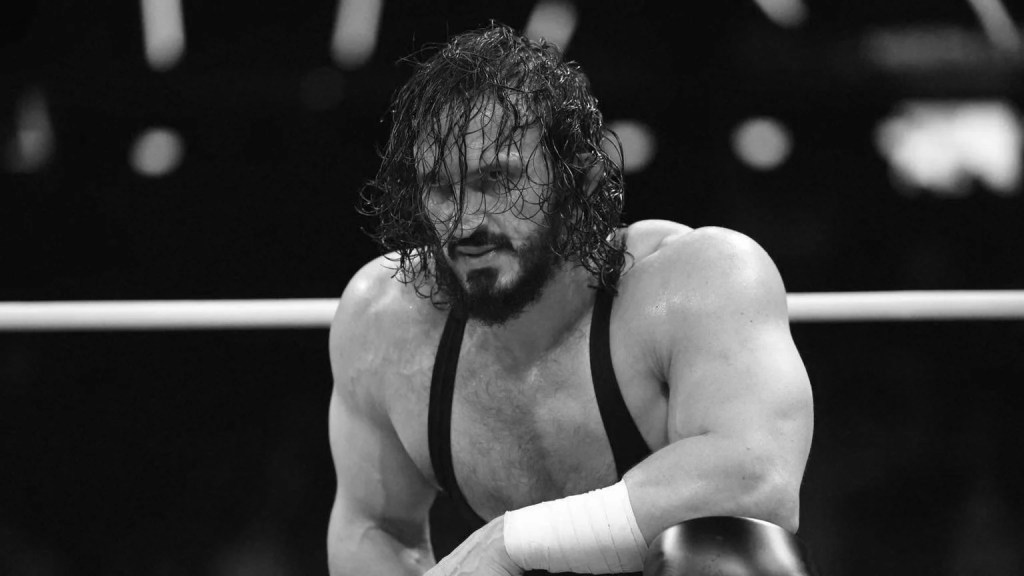
    And while the main event scene doesn’t have a nWo, it does have one of the best mixes of top talent in recent memory gunning for the AEW Men’s World Champion, Maxwell Jacob Friedman. This has resulted in Andrade becoming a real main event player seemingly overnight following his return, Brody King and Bandido springboarding from tag team champions to the top of the card, and Swerve Strickland delivering a vicious beating to Kenny Omega and putting the ‘Best Bout Machine’ through the announce table with a vertebreaker.

    Go watch an episode of WCW Monday Nitro from July 1996 to August 1998 and the similarities will stand out almost immediately.

    Even a “throwaway” taped episode of Collision echoes the fun, weirder side of WCW. And if you don’t believe me, look up an episode of early- to mid-90s WCW Saturday Night and tell me a taped Collision isn’t just the modern version of Saturday Night.

    The Bad

    Unfortunately, it appears the bad of WCW in the 90s is much more visible from WWE through February 2026.

    Circling back to WCW’s main event scene, as hot as it got thanks to the nWo, it didn’t resolve the obvious issue that most of the promotion’s top names were getting up there in age. Hogan, Flair, and Randy Savage were already around their mid-to-late 40s when the nWo blew up, while Sting, Lex Luger, Kevin Nash, and Scott Hall were not young names, either. Add to that the apparent death grip many of these names had on the top of the card, and suddenly a hard ceiling existed on the main event that the rest of the card struggled to get around.

    It would lead to the departure of names like Chris Jericho, Chris Benoit, Eddie Guerrero, and Big Show, who was known as The Giant in WCW. All four of these names would become far bigger names in WWF/E, all winning world titles at various points and three who got to main event a WrestleMania.

    Plenty of talented names remained in WCW until the end, including Rey Mysterio, but never found themselves much higher on the card than where they had been when they debuted. If they weren’t somehow related to a top name or “boys” with them, you had no chance of even sniffing a real main event spot.

    WWE is running into a similar problem as the top of the card is aging out. Seth Rollins, at 39-years-old, remains one of the younger consistent names at the top, while most are anywhere between 40 and 50-years-old.

    Bron Breakker, the son of Rick Steiner and nephew of Scott Steiner, appeared to be the one young name that was being groomed for a main event push before suffering a severe, aggravated hernia and underwent emergency surgery.

    As of March 1, 2026, he is out indefinitely and could potentially miss WrestleMania 42.

    WWE isn’t lacking in talented, younger names, though. Dragon Lee, Carmelo Hayes, Ilja Dragunov, Solo Sikoa, and Pete Dunne are just a few of the names in their late-20s to early-30s that feel like they could, and maybe should, be further up the card than they are in early 2026.

    Even the women’s division, where some of WWE’s biggest names are currently found, feels as if it has cooled off significantly. The injury to Bianca Belair has certainly been a blow to the division, but the creative efforts put into the division and stars like Rhea Ripley, Becky Lynch, Liv Morgan, Iyo Sky, and Raquel Rodriguez, among others.

    The bombardment of ads and sponsorships, smaller match cards, and longer downtime between those matches has all worked against WWE amid what fans and critics feel is a larger creative downturn.

    It echoes of WCW across 1999 and 2000 as a sharp creative downturn took place, only made worse by multiple attempts to shake up WCW’s creative team. Eric Bischoff, Kevin Sullivan, Kevin Nash, and Vince Russo were just a few of the names rotated in-and-out as head of creative over those two years. It resulted in cards that, ironically, the opposite of modern WWE shows.

    Nitro would start having more matches, but those matches would average 2 to 5 minutes while angles and promos are given no room to breath. The creative, itself, would also be lambasted for everything from lack of direction to being in extremely poor taste.

    One added wrinkle to WWE that WCW did not deal with, though, are the moral-driven reasons wrestling fans have continued to hammer WWE, and have only gotten louder due to WWE’s creative downturn.

    WWE’s deal with Saudi Arabia continues to be a consistent point of criticism given the human rights violations committed by Saudi Arabia and its leadership. It has been made worse with the announcement that WrestleMania 43 will be in Riyadh, Saudi Arabia, in 2027.

    There is also the Janel Grant lawsuit against Vince McMahon and WWE which remains ongoing. Grant made her first public appearance on February 20, 2026, to the Connecticut Alliance to End Sexual Violence. She primarily spoke about the NDA she signed with McMahon and the last few years of her life dealing with her lawsuit and cooperation in federal investigations against McMahon and WWE.

    It isn’t to say everything in WWE is experiencing a downturn, though. Since AAA found a home on TV in Mexico and on YouTube in the U.S., it has become an extremely popular show with more hardcore fans thanks to a strong in-ring product and variety of stars between established luchadors and names in WWE’s developmental system. Evolve is also becoming an underground sensation with some fans thanks to names like Sean Legacy, Kendal Grey, and many of the WWE ID and PC talent.

    WCW’s Legacy

    The states of WWE and AEW in early 2026 is just another example of the impact WCW left on the professional wrestling industry despite dying roughly 25 years ago.

    The immediate impact of WCW, especially in the late 90s, was obvious at the time, but hindsight is always 20/20 and this has only added to WCW’s legacy. An obvious example is the formatting of most modern TV wrestling, including WWE’s, is modeled in some form on Nitro that helped propel WCW to its most successful period.

    Many of the stars who gained their first national exposure, most notably Chris Jericho and Rey Mysterio, are still working today as active wrestlers while others such as Shane Helms and Dean Malenko are serving as backstage producers in WWE and AEW.

    Several of them have even had their kids take the jump into professional wrestling, with Dominik Mysterio becoming a prominent part of WWE TV while his sister Aalyah has started her in-ring training according to Rey Mysterio. Malenko’s daughter, Marie Malenko, was also confirmed to be one of the many names at a major February 2026 WWE tryout.

    Given how much time has only added to WCW’s legacy, this will likely continue for as long as professional wrestling exists and there are two national TV promotions to build on that legacy.

  • Flagrant Flashback – Taz vs. Masato Tanaka vs. Mike Awesome at ECW Anarchy Rulz 1999

    The year 1999 was an interesting year for the professional wrestling industry.

    At the national level, WWF and WCW were still doing huge business, though that wasn’t to say there were very obvious cracks. WWF would spend roughly half of the year with Vince Russo being the lead voice in creative under Vince McMahon, with WrestleMania 15 cited as one of the worst WrestleMania’s in the show’s history.

    WCW, meanwhile, was starting to take a very clear creative nosedive. The year kicked off with the infamous “Finger Poke of Doom” on the January 4 Monday Nitro, which saw WCW World Heavyweight Champion Kevin Nash lay down for the returning Hulk Hogan in a title match. Things would only get worse as the year went on with multiple, drastic changes made on WCW’s creative team between the removal of Eric Bischoff, Kevin Sullivan’s short tenure, and the arrival of Vince Russo. WCW would also post a loss in the reported range of $9 to $11 million for 1999, a sharp fall off from the reported $33 to $50 million in profits for 1998.

    ECW was experience struggles of its own. The company could never seem to find its footing, financially, with 1999 being another year of bounced checks and broken promises for many wrestlers there. The promotion would also be raided for more talent over the course of the year, purging it of many stars, even with Raven and The Sandman returning in the second half of the year.

    Despite these issues, ECW was still able to put on some of the best shows in the U.S. at that time due, ironically, to their more limited national exposure. Fans would be treated to some of the most wild hardcore matches and athletic, high-flying, or technical showcases in professional wrestling at the time and manage to bring in names from all over the world.

    ECW Anarchy Rulz 1999 is no exception thanks to matchups like Jerry Lynn vs. Lance Storm as the opener and a three-way dance between Yoshihiro Tajiri, Super Crazy, and Little Guido.

    It was the ECW World Heavyweight Title match, though, that would leave its imprint on fans minds for the match, itself, and everything surrounding the match.

    The Background

    Originally announced as a singles bout, the ECW World Title match was announced as the champion, Taz, defending against the challenger, FMW Independent Heavyweight Champion Masato Tanaka. Tanaka had become a popular wrestler in ECW following his debut in 1998 thanks to his intense, physical matches and almost super-human resilience.

    It became clear as 1999 went on, Tanaka would likely find himself standing across from Taz, who won the ECW World Heavyweight Title at Guilty as Charged on January 10, 1999. When the match was announced for Anarchy Rulz in September of 1999, ECW would use footage of Tanaka defeating his longtime FMW rival Mike Awesome, who was known as The Gladiator in Japan, to build excitement for the match.

    This would not go unnoticed by Mike Awesome and his manager, Judge Jeff Jones, in storyline.

    And then there were the backstage tensions between Taz and ECW owner and booker Paul Heyman, which started reaching a boiling point in 1999.

    The longtime ECW stalwart and defending world champion was contacted that year by WCW and WWF about signing him after his ECW deal was up. Taz hadn’t signed a new deal with ECW yet, and, years later, would explain he was wary of ECW’s financial issues that were only becoming more frequent. These concerns, on top of his wife giving birth to their son Tyler, better known as Hook in AEW, that May, would lead Taz to signing with WWF.

    News got out and ECW fans were not happy, booing and cursing out Taz in his final shows including Anarchy Rulz. Heyman wasn’t happy, either, as Taz had been one of ECW’s first true “homegrown stars” after Heyman took over as booker from Eddie Gilbert in 1993.

    Real-life and storyline would ultimately coalesce into a world title match that, while it didn’t close Anarchy Rulz, remains the match fans best remember.

    The Match

    Cut to Anarchy Rulz 1999.

    The world title match between Taz and Tanaka was set to go on third to last for what would be Taz’s second-to-last pay-per-view match as a contracted ECW wrestler.

    After making their entrances and being covered in streamers thrown by fans, both the wrestlers and the crowd would be distracted by a disturbance at ringside. It would be none other than Mike Awesome and Judge Jeff Jones, who commentators Joey Styles and Cyrus suggests “stooged” to Awesome about ECW using the footage of Tanaka beating him in ECW to help build excitement for Tanaka vs. Taz.

    Heyman would come out to join security trying to keep Awesome from jumping the rail, only for Taz to grab a mic and tell Heyman to let Awesome go. Styles made note of how Taz was talking to Heyman and hinted at the “real heat” between the two at the time. Heyman ultimately gave in to Taz’s wish, making the match a three-way dance, which meant the match wouldn’t end until two of the three challengers were eliminated by pinfall or submission.

    Awesome started off bee-lining for Tanaka, playing on the pair’s history in ECW and over in Japan at FMW, while Taz stood in the opposite corner and let the pair beat on each other. Awesome and Tanaka quickly realized what Taz was doing and decided to focus all their attention on Taz. The pair would manage to land a couple of blows on Taz before the human-suplex machine lived up to his name, deliver some devastating Taz-plexes, as Styles called them, to Tanaka and Awesome.

    The two would manage to find an opening, though, and lay in their offense on the defending champion. After another brief back-and-forth, Tanaka would hit his devastating Roaring Elbow on Taz followed by a frog splash by Awesome to eliminate Taz in roughly three to four minutes.

    With a new champion guaranteed, Taz would leave for the locker room in shock while the crowd jeered him off.

    Tanaka and Awesome, meanwhile, kicked things into second gear in the ring and began throwing haymakers at each other for the remaining ten or so minutes of the 13 minute 48 second match. Awesome, in particular, got the jeering crowd to focus back on the match with a massive dive from the ring to the floor, an impressive feat for a six-foot-eight wrestler who weighed anywhere between 280 and 320 lbs during his career, to say the least.

    The remainder of the match would see Tanaka and Awesome go back and forth with big moves, with plenty of chairs and tables getting utilized.

    Tanaka would introduce chairs to the match, hitting Awesome with a few shots to the gut before running the length of the entrance ramp to crack Awesome in the head with it. Tanaka made liberal use of chairs between hitting Awesome with multiple tornado-DDTs onto a chair and laying a chair on Awesome face to hit with another chair off a top-rope dive.

    Awesome wouldn’t take this lying down, hitting Tanaka with an Awesome Bomb from the ring through a table Awesome set up on the floor earlier. The massive Awesome didn’t take it easy on Tanaka, hitting him with plenty of big moves as payback for earlier, especially when Awesome got his hands on a chair.

    Despite all this and multiple nasty chair shots to the head, Tanaka was able to fire back and attempted another Roaring Elbow. Awesome was able to avoid it and the two went back and forth briefly before Awesome got the upper hand with a big release German suplex followed by a spear.

    Judge Jeff Jones would finally get involved somewhat, sliding a table into the ring for Awesome to use to try and put Tanaka away. The two would end up trading punches on top of one of the corner turnbuckles before Awesome got the advantage, putting Tanaka through the table with a super-powerbomb to win the match and become the new ECW World Heavyweight Champion.

    Taz would return from the locker room to personally hand the ECW World title to Awesome, himself, and raise his hand, giving the new champion his personal endorsement.

    Aftermath

    Taz

    While Taz would still be around ECW for another couple of months, he was effectively on his farewell tour before officially joining the WWF. His final pay-per-view match as a signed ECW star would be against Rob Van Dam for the ECW World Television Championship at November to Remember 1999. He would then debut for the WWF at the 2000 Royal Rumble, defeating Kurt Angle and ending the Olympian’s winning streak in grand fashion.

    However, years of injuries and hard matches would start catching up with Taz at this time and was reflected in some of his ring work. Questionable booking, at the best of times, didn’t help things either as it felt at time the WWF was going out of its way to make Taz look like a fool.

    By June 2002, Taz had fully retired from in-ring competition and became the full-time color commentator for the now-WWE’s Thursday show SmackDown. He would serve as a color commentator in WWE until 2009, departing the company after almost a decade.

    Taz would sign with TNA shortly after this, joining the Main Event Mafia to serve as Samoa Joe’s manager before ending up back on commentary alongside Mike Tenay. The two would serve as TNA’s lead commentary team until he departed in 2015.

    While Taz would appear on a WWE Network special looking back at ECW, he would remain out of professional wrestling until 2019. He would land his own nationally-syndicated morning radio show Taz and The Moose with co-host Marc ‘The Moose’ Malusis.

    Taz returning to professional wrestling in October 2019 as a guest commentator for an episode of AEW Dark before officially signing with All Elite Wrestling in January 2020. He would initially split time as a manager and color commentator, leading Team Taz which included his son Hook, Brian Cage, Powerhouse Hobbs, and Ricky Starks. The group officially disbanded in August 2022 while Taz continues to serve as a full-time color commentator for AEW.

    Masato Tanaka

    Tanaka would continue to appear in ECW until returning to Japan around mid-2000, where he continued working for FMW through February 2001. He would begin working as a freelancer in Japan, regularly appearing for promotions such as New Japan Pro-Wrestling, Zero1, and Pro-Wrestling Noah over the next 25 years.

    His travels would bring him a slew of titles, as well, from being the inaugural Never Openweight Champion in New Japan to winning the KO-D Openweight Championship, the most prestigious title in DDT Pro-Wrestling.

    While he wouldn’t tie himself down anywhere, he would regularly make one company his focus for a year or so before taking opening his schedule back up for more bookings at other promotions. The most recent of these runs has been in Zero1, where Tanaka has appeared regularly since March 2025.

    He would continue coming back to the U.S. over that time, as well, typically for bigger independent events and smaller “national” promotions such as Ring of Honor. However, he hasn’t taken an extended excursion from Japan for years, typically now only leaving the countries for a handful of shows a year.

    His last appearance in the U.S. was for DEADLOCK Pro-Wrestling at DPW Forever 2025 on March 16, 2025. Tanaka would team with Colby Corino, son of former-ECW World Heavyweight Champion Steve Corino, to defeat the team of Calvin Tankman and Trevor Lee.

    Tanaka would work one match for WWE in 2005, taking part in ECW One Night Stand to battle his longtime rival one more time in the Hammerstein Ballroom.

    Mike Awesome

    While Awesome was effectively crowned as the “new face” of ECW at Anarchy Rulz, he would ultimately leave in 2000 after signing out of the blue with WCW. Awesome was still the ECW World Heavyweight Champion when he debuted on WCW Monday Nitro, though he did not have the physical belt with him in order for WCW to avoid any legal battles with ECW.

    A deal would then be worked out for Awesome, a contracted WCW wrestler, to drop the title in a surprise title match at an ECW event in Indianapolis, Indiana, in April 2000, to none other than Taz, who was a contracted WWF wrestler.

    Lance Storm, a close friend of Awesome, would reveal years later that Awesome left ECW as suddenly as he did because his contract was up and refused to sign a new deal until Heyman paid him overdue wages.

    Awesome’s WCW tenure would have plenty of ups and downs, initially debuting as part of The New Blood on the April 10, 2000, edition of Nitro. He quickly found himself in programs with many of WCW top names such as Hulk Hogan, Kevin Nash, and Diamond Dallas Page. However, the rest of 2000 would not be kind to Awesome thanks to Vince Russo ideas such as “The Fat Chick Thriller” and “That 70’s Guy.” By January 2001, Awesome would get back to his more serious self after joining Team Canada as the “Canadian Career Killer” and was part of the group until WCW’s purchase by the WWF in March 2001.

    Awesome would briefly join the WWF as part of the Invasion storyline and would appear sporadically over the next year before being released in September 2002.

    He continued working on the independent scene in the U.S. while returning to Japan on occasion, though he did appear briefly for TNA in 2003.

    His final, high-profile match would be in 2005 against his longtime rival Tanaka for ECW One Night Stand, where Awesome was greeted by some jeers during his entrance for the manner he departed ECW. By the end of the match, though, the two received a standing ovation.

    Awesome retired from wrestling in 2006, becoming a real estate agent in New Tampa, Florida. Unfortunately, Awesome would be found dead by several fans after hanging himself in his Tampa home.

    Final Thoughts

    In spite of the problems that were becoming more and more prevalent in ECW as 1999 went on, this match highlighted what ECW could do better than anyone at the time. It managed to blur reality and kayfabe together in a way that didn’t feel forced and made a highly anticipated match even better.

    It was a reminder that, in hindsight, ECW was truly the first “super-indie” to make it on something of a national stage in professional wrestling. It wouldn’t be enough to keep the promotion going, as it would shut its doors in 2001, but it did set the foundation for independent promotions such as PWG, GCW, and DPW that would become a “super-indie” for a time.

    And then there is Mike Awesome who, of the three wrestlers, feels the most ahead of his time.

    Taz was ahead of his time, as well, but with names like Kurt Angle, Chris Jericho, and Dean Malenko, among others, gaining national exposure, the industry was catching up to what Taz had been doing at the ECW Arena for years as the ‘Human Suplex Machine.’

    Tanaka was in-line with what was happening in Japan, especially with the popularity of All Japan, All Japan Women’s and New Japan. All Japan treated fans to longer matches that showcased a more physical, technical style dubbed the “King’s Road” style while New Japan had “Strong Style,” a more MMA-focused in-ring style mixed with faster matches and a surging Junior Heavyweight division led by Jushin Thunder Liger. Tanaka fit right in with this, especially in FMW where hardcore matches were also a big draw that helped the promotion stand out, much like ECW in the U.S.

    Awesome, by comparison, feels like a wrestler over 20 years too early for the U.S. scene. At that time, most “big men” in wrestling worked a slower, more methodical style that could save their body and make them look like monsters against the rest of the roster.

    Awesome was regularly doing tope dives and springboards into the crowd, among other things, which was mind-blowing to U.S. fans at the time given Awesome’s size. Combined with a variety of power moves almost designed to showcase his athleticism made Awesome stand out at a time when wrestling was white hot in the U.S.

    Unfortunately, the two companies didn’t appear to know how to showcase this at the time between bad gimmicks or just not having him on TV at all. He wouldn’t survive to see the industry evolve into what it is today, where athletic “big men” like Awesome are sought after by WWE, AEW, TNA, MLW, New Japan, and most other major promotions. Awesome would have fit right in working wrestlers such as Keith Lee, Donovan Dijak, Toa Liona, and Damian Priest, trading power moves and high-flying spots on shows to rousing audience reactions.

  • Other Anime Ripe for a Live Action Adaptation After One Piece

    With season two of Netflix’s live-action One Piece series right around the corner, fans have not even tried to hide their excitement at seeing the live action Straw Hats finally cross into the Grand Line.

    Season two already promises to hit the ground running with locales including Loguetown, Whiskey Peak, and Drum Island as the Straw Hats have their first run-ins with Baroque Works. Ms. All Sunday, Ms. Wednesday, Mr. 3, and Mr. 5 are just a few of the assassins Monkey D. Luffy will have to contend with, along with new threats from the Navy such as Captain Smoker, and old adversaries like Buggy the Clown.

    Its success also begs the question – what anime could be the next to make a successful jump to live-action?

    As of 2026, One Piece remains more the exception and not the rule when it comes to the quality of live action adaptations. More often than not, they just aren’t very good. Quality has slowly been trending upward, though, but One Piece still vastly outpaced most other adaptations.

    It doesn’t mean there aren’t plenty of anime that are ripe for live-action and may even benefit from jumping to that medium.

    Cowboy Bebop

    Alright, let’s get the obvious out of the way. Yes, Netflix already took a crack at adapting the beloved space western anime to live action in 2021 and it didn’t work out. The show had some bright spots, especially when it came to the core trio of Spike Spiegel, Jet Black, and Faye Valentine, but it wasn’t enough to overcome the rest of the show’s shortcomings.

    It doesn’t mean the world of Cowboy Bebop isn’t worth taking another crack at.

    Despite being a space western, Cowboy Bebop has a somewhat grounded aesthetic that does lend itself to live action. The world is a blend of futuristic sci-fi, modern industrial, and old west styles that allows the world to feel fantastical while still feeling believable.

    The action is also more grounded compared to other anime out there. Most fights are resolved in either gun fights or intense martial arts duels which are easy enough to translate, and even the more over-the-top sequences don’t feel so out of place in live action.

    Its now just a question of who is willing to take that second crack at Spike and the crew of the Bebop?

    Berserk

    In the realm of fantasy anime and manga, one of the longest-running and most recognized names in the genre is Berserk.

    The dark fantasy series follows the journey of Guts, a mercenary raised to fight from childhood, who fought as part of a legendary mercenary group named the Band of the Falcon. Tragedy befalls the group, though, setting Guts on a path of revenge against the demonic God’s Hand and its numerous apostles.

    This short description doesn’t do justice to how dark Berserk can truly get, regularly putting central characters such as Guts, his lover Casca, the tiny elf Puck, and several others through the physical and emotional ringers regularly. It isn’t shy about giving you reasons to hate the villains at the heart of Berserk’s story, especially the newest member of the God’s Hand, Femto.

    A big reason a Berserk adaptation is even a possibility is because studios have been on the look out for the next “Game of Thrones” and getting it on their respective platform. As of February 2026, the closest anyone has gotten is HBO with simply more Game of Thrones-related content in House of the Dragon and A Knight of the Seven Kingdoms. Other series such as Amazon Prime’s Rings of Power and Netflix’s The Witcher have done well enough, but haven’t been able to command audiences’ attention the way Game of Thrones did.

    Berserk, being a dark fantasy series with a style very much in-line with traditional Western dark fantasy, could easily throw its hat into the ring to take that Game of Thrones’ crown. It is violent, sexy, emotional, and everything in between that audiences look for in dark fantasy shows and films.

    Gundam

    Next is the proverbial-king of mecha, Gundam. It is among one of anime’s biggest and most successful franchises, in and out of the mecha genre, as it nears its 50th anniversary in 2029.

    Gundam began life with the original anime Mobile Suit Gundam in 1979, set in what would become known as the Universal Century timeline. The series follows what becomes known as the One Year War, a massive conflict between the Principality of Zion and Earth Federation. The war is fought using towering mech suits, or Mobile Suits, resulting in devastating levels of destruction on Earth and across the various colonies involved in the war.

    As Gundam grew, the franchise would expand with various spin-off series and timelines, though the Universal Century timeline would be the one the franchise would revisit most often.

    The point is that this, alone, gives anyone trying to bring Gundam to live action plenty to pull from for a film or a show. They could dive headfirst into bringing the Universal Century to the screen or adapt any of its one-offs such as Gundam Wing or Mobile Fighter G Gundam to “test the waters” for more Gundam.

    Aesthetically, as well, it is another universe that may be easier to translate to the screen.

    Mecha of various forms are not new to modern film and TV screens between things like Pacific Rim and Power Rangers. There’s an argument that, compared to those examples, many of Gundam’s series are even more grounded in its designs than some Western mech properties.

    Where Gundam gets significantly darker, though, is the franchise’s thematic choices. Many of the series focus on the cost of war, child soldiers, and loss of innocence via the conflict on screen. The lead character in most Gundam series is, more of than not, teens who haven’t even seen their 16th birthday. Audiences are given a view of the conflict through their eyes and see just how these destructive battles take their toll on them.

    Given the state of the world in 2026, sending such a poignant message via a colorful, bombastic mecha anime live action adaptation may not be a bad idea.

    Hellsing

    The last one on the docket today is vampire-centric series, Hellsing.

    Like Western entertainment, Japan loves to offer its takes on vampires and Dracula via anime, manga, and video games. One obvious example of this is the Castlevania franchise, which began as a massively successful video game franchise from Konami that has since been adapted into an anime series for Netflix.

    And then there is something like Hellsing, which takes any sense of subtlety and throws it right out the window.

    Set primarily in the United Kingdom, Hellsing follows the exploits of the Hellsing Organization, England’s top secret and premiere monster hunting group. It is led by Sir Integra Fairbrook Wingates Hellsing, the descendant of Abraham Van Helsing, and commands the power of the organization’s most dangerous weapon and hunter, Alucard.

    Formerly known as Count Dracula, he is the original and most powerful vampire in existence. He was defeated by Abraham Van Helsing and swore loyalty to his family, becoming their loyal hunter.

    The two are also joined by the Sir Integra’s loyal retainer Walter C. Dornez and Seras Victoria, a policewoman who was turned into a vampire by Alucard after being attacked and mortally wounded by another vampire Alucard was hunting.

    The original series follows Alucard and Hellsing as it investigates an uptick in vampire attacks across England and its neighbors, putting them at odds with the Vatican’s own secret monster hunting organization, Section XIII. Pulling the strings behind the scenes is the mysterious group Millennium, a dangerous force comprised of Nazis who survived World War 2 and are dead set on seeing Hitler’s vision of a “thousand year Reich” to fruition. Most of the organization’s soldiers have been transformed into vampires as part of this effort, led by a man known only as The Major.

    As mentioned, Hellsing throws subtlety right out the window from the start. The action and dialogue is extremely straight to the point and over the top, especially when Alucard is standing across from his greatest rival in the series, Father Alexander Anderson of Section XIII.

    Despite this, Hellsing’s visual design remains fairly grounded in Western modern and gothic designs befitting of European vampire lore.

    The dialogue, if anything, may have to be reined in somewhat just to better fit live action mediums, otherwise Hellsing could easily find its way to film or television.

  • Wrestling Needs a New PWG

    Let’s turn the calendars back.

    It’s 2016 at the American Legion Post #308 in Reseda, California. There are between 300 and 400 people packed shoulder-to-shoulder in this cramped, hot legion hall with little-to-no air conditioning at the end of the summer to witness one of the biggest annual tournaments on the independent wrestling scene – Pro Wrestling Guerrilla’s Battle of Los Angeles.

    Some of the names taking part in the three-day tournament include the Lucha Bros, Will Ospreay, Zack Sabre Jr., Adam Cole, The Young Bucks, Cody Rhodes, Pete Dunne, Tommaso Ciampa, Ricochet, and even the legendary Jushin Thunder Liger

    Over the next three days, fans in attendance get to witness some of the best professional wrestling in the world featuring some of the hottest names available. This will range from high-flying showcases to technician battles, striking wars, and even some comedy to help close out the weekend.

    While the Battle of Los Angeles historically involved many big independent and international names in the wrestling industry, the 2010s in particular saw every show put on monthly from the Southern California indie promotion featured talent that are still active today and among the top talents in the world still active in 2026.

    The biggest North American promotions anyone booked at PWG worked for during this period was either TNA or Ring of Honor, while managing to book major names from Europe, Mexico, and Japan on occassion.

    PWG became such a hotspot, even Hollywood celebrities made their way to Reseda to see what all the ruckus was about. Joe Manganiello, Sofia Vergara, Danielle Fishel, and Ronda Rousey are among a few of the names spotted in attendance at PWG shows across the 2010s as the independent promotion was at its peak.

    It also became a key promotion WWE sent talent scouts to, especially during the height of the NXT Black and Gold Era. Kevin Owens and Sami Zayn have spoken multiple times about meeting William Regal, who began working as a talent scout for WWE after stepping away from in-ring competition, whenever he stopped by PWG shows to see who was on it and if anyone caught his eye.

    In spite of its popularity, PWG was one of many independent promotions hit hard by the COVID-19 shutdown. It wasn’t able to put on shows for well over a year before it was able to start back up, this time at the Globe Theater in Los Angeles, California, due to ticket demand surpassing the Legion hall’s capacity. While it was able to continue putting on the kind of shows fans had come to expect, the start of AEW and multiple talent raids by multiple companies had drained the independent scene at the time, even if several of those promotions allowed talent to continue taking indie bookings.

    By 2023, though, PWG co-founder, co-owner, and independent wrestling legend Super Dragon announced the promotion was going on “indefinite hiatus” due to his girlfriend’s battle with cancer. It has remained on “hiatus” since as of January 2026, which has since seen the Globe Theater close its doors and no update provided on the status of Super Dragon’s girlfriend’s health.

    Since then, the independent scene has missed that one “all-star” promotion that brought in the hottest names available to let them show what they could do.

    Deadlock Pro-Wrestling appeared to be on its way to filling that void, with the North Carolina-based indie featuring a mix of prominent talent working along the U.S. East Coast. Unfortunately, the promotion’s founders and content creators James Darnell, John Blud, and Anthony Douglas announced DPW would be going on an “indefinite hiatus” as well amid rising show costs and multiple other promotions such as Prestige Wrestling also going on hiatus or closing their doors completely.

    All this is to say that PWG has left a massive void on the indies that has yet to be filled.

    Some fans could argue Game Changer Wrestling more than fills that void between showcasing talent local to whichever country or area of the U.S. they were running a show along with a core group of talent seen fairly regularly at GCW shows. However, it could also be argued between GCW’s branding and focus on deathmatches that it has more in common with ECW and CZW than PWG.

    Anyone who was anyone in wrestling not already signed to WWE or to an exclusive deal with another promotion worked in PWG. WWE, AEW, TNA, and New Japan are four of the many promotions packed with talent who wrestled in PWG between 2010 and 2023.

    As mentioned previously, the 2016 Battle of Los Angeles lineup was just one example of how loaded the monthly PWG shows had become during the 2010s. One month, fans in attendance could see Kevin Steen and El Generico have one of their rivalry’s most legendary ladder matches, the next, a chaotic, hilarious ten-man tag that involved slow-motion and thumbs being shoved into posteriors.

    It truly was wrestling’s equivalent of underground punk rock and the three years without PWG has definitely been noticeable.

    This isn’t because of a lack of talent. If anything, it is the opposite in January 2026. It took several years for the indies to recover from the formation of AEW in 2019 and the scene being gutted of most of its high-profile talent. While it hurt in the short run, it opened the door for new names to emerge and emerge they have.

    Some of the names that could easily be featured on a modern PWG-style show include 1 Called Manders, Gringo Loco, Titus Alexander, Labron Kozone, Sinner and Saint, Violence is Forever, Cara Noir, and Man Like DeReiss. It is just as deep on the women’s side of things, as well, with Shotzi Blackheart, Priscilla Kelly, Brooke Havok, Brittnie Brooks, VertVixen, Millie McKenzie, and Hyper Active.

    The real question is what promotion could capture similar lightning in a bottle PWG was able to on its way to becoming what it did on the indies.

    Part of what worked in PWG’s favor was that there really wasn’t any other independent promotion quite like it out there. Getting booked on one of these shows was a pseudo-endorsement of a talent’s ability, especially if they were brought back. The crowd felt just as important to making the show, whether it was quietly focusing on two technicians trading holds or losing their minds, chanting until their voice is horsed and slamming their hands on the edge of the ring since the crowd was packed together so closely.

    While that sort of environment can be difficult to replicate, it can be done and one promotion will, in all likelihood, be able to recapture that magic one day. As for what promotion is able to fill that void, or if PWG is able to make a triumphant return in the future, professional wrestling will be better for it when that promotion finally emerges.

  • The Curious Case of Andrade el Idolo

    Coming out of April 2018, the then-Andrade ‘Cien’ Almas dropped the NXT Title to Aleister Black to close out a very strong in-ring reign and was main roster bound in WWE. He would be moved to SmackDown, have his name shortened to just Andrade, and remained fairly stagnant in WWE’s midcard.

    The following years saw Andrade go thru a variety of professional and personal ups and downs from being released by WWE, signed by AEW, depart AEW for WWE after a drama-filled first tenure, rejoining his then-wife Charlotte Flair only to end up in the same spot he was before and the couple divorcing.

    Andrade was ultimately fired by WWE, again, in September 2025 reportedly for “numerous WWE Wellness violations” during his second tenure.

    He returned to AEW a few weeks later in October by attacking Kenny Omega and joining the Don Callis Family, only to have that temporarily halted after WWE accused Andrade of violating his non-compete clause. The alleged clause could have kept Andrade out of the ring, at the very least on TV, for a year.

    The situation was resolved by December and Andrade was free to get back to work. He started by ringing in 2026 with New Japan on Wrestle Kingdom 20 on January 4 and New Year’s Dash on January 5 as United Empire’s new financial backer. He then returned to AEW TV, still part of the Don Callis Family, and to say he has hit the ground running would be an understatement.

    In one month, Andrade appears to have made believers out of most wrestling fans that he could, should, and would be right at the top the card vying for world titles.

    One Fateful Night

    The evening before this was written, Andrade got to share the ring with Kenny Omega for the first time since a match in AAA for the AAA Mega Championship in August 2021.

    Omega was in the midst of his Belt Collector run and Andrade had only been released from WWE a short time before this. It was a very good match, but was nothing that stood out among the rest of either wrestler’s career. Omega was also working through several injuries at the time, injuries that would keep Omega off AEW television for almost a year.

    Additionally, Andrade is lacking the confidence he has exuded in his first month back with AEW. He is still good, but it appears as though the state of his career is getting to him.

    The Omega and Andrade that met in the ring the evening of Wednesday February 4, 2026, are most certainly not the wrestlers they were when they met in the early 2010s. These are two men who have seen their share of injuries and professional struggles in that time, along with plenty of success and growth as professional wrestlers.

    These were not the two who met while neither was at one-hundred percent physically or psychologically. Omega and Andrade were like a pair of seasoned, well-tuned muscle cars that may not be as fast as the supercars, but they’ll still out run 90% of what’s out there on top of having the size and strength to throw its weight around.

    Omega and Andrade are every bit of the grizzled veterans they are and proved it on AEW Dynamite.

    And in a situation where the winner of a number one contender’s match at AEW Grand Slam Australia punches their ticket to the main event of AEW Revolution, some fans expected to see Omega win to face ‘Hangman’ Adam Page in Australia to challenge the champion, who the week before many presumed would be Maxwell Jacob Friedman.

    But in this one night, that may have changed.

    Andrade would end up winning the match against Omega thanks to Swerve Strickland intervening to stop Andrade from hitting Omega with a screwdriver. Strickland distracted the referee as a result, allowing Andrade to hit a low blow on Omega followed by the DM to win.

    Andrade is scheduled to face ‘Hangman’ Page in Australia at AEW Grand Slam on February 14, 2026.

    Later in the night, Brody King faced MJF in Dynamite’s main event in an eliminator match where if King wins, he gets an AEW Men’s World Championship match in Australia. King has had a slow but steady rise in AEW with fans gravitating to his physical, hard-hitting style, his look, and his use of AEW to platform to promote LGBTQ+ and immigrant rights.

    The latter of these four appears to have resonated the most with AEW’s audience and was on full display on this Dynamite with a very loud “F*ck ICE” chant as King and MJF met in the main event.

    After the referee rings the bell, Page comes out on the stage to distract MJF. This leaves the AEW Men’s World Champion open to a hanging sleeper hold from King over the edge of the outside apron. King then drags MJF back in the ring and throws him in a corner to hit MJF with a running cannonball senton. King pulls MJF up and closes the match out with a Gonzo Bomb in the center of the ring, earning an AEW Men’s World Title match at Grand Slam Australia.

    In one night, AEW set up the genuine possibility of Brody King going to AEW Revolution in King’s hometown of Los Angeles, California, at the Crypto.com Arena as AEW Men’s World Champion. Andrade could find himself standing across the ring as King’s opponent in the show’s likely main event.

    Eight Years an Overnight Sensation

    In King’s case, the end of the evening felt like a culmination of a long build for the 38-year-old, ten-year veteran. It felt as if he had been earmarked by AEW for a long time as a potential main event player, in spite of any bumps in the road he experienced in his near-four years with AEW.

    Andrade’s rise up the AEW card in such a short period cannot be overstated. Saying it has been meteoric doesn’t do justice to how quickly Andrade rose up the card and started knocking on AEW’s main event scene. He has beaten Swerve Strickland and Kenny Omega in back to back weeks and doesn’t feel out of place at all.

    To steal a phrase, he waited eight years to become an overnight sensation.

    Watching Andrade in the ring the last several weeks, it is as if he has rediscovered what made him NXT Champion to lose out 2017 and ring in 2018 for the then-Black and Gold brand. He is carrying himself with a clear and present confidence that has been missing for the last several years. Andrade remembered who he is and what he can do and is showing that on TV every week.

    The skeptic would say this is likely due to Andrade knowing this is probably his last shot at a major, televised wrestling promotion and is on his best behavior in and out of the ring. Even if that is the truth, it is paying off for Andrade. Between his ring work looking the best it has in years and the confidence written all over his face, Andrade is proving how natural he fits right in at the top of the card.

    Just The Start?

    All this could just be first of many big moments to come for Andrade on this second outing with AEW.

    As mentioned earlier, King vs. Andrade is a genuine possibility to main event AEW Revolution for the AEW Men’s World Championship. It would be the ideal situation for any promotion to find itself in as either wrestler leaving with the world title if a good direction. There are plenty of opponents lined up that can be put up against King or Andrade and either one works. An Andrade may have slightly more longevity since he is a heel so it may be easier to build up fresh opponents, but its a win-win all around.

    Then there is Andrade’s involvement with the Don Callis Family, which is experiencing some internal issues at the moment due to friction between Konosuke Takeshita and Kazuchika Okada. Depending on how things shake out, it could leave an opening at the top of the Don Callis Family and Andrade would be in the perfect position to claim that spot for himself.

    And this isn’t to mention what his involvement in New Japan and United Empire could be beyond just the odd appearance with the faction for bigger shows. He could also find his way back to CMLL, this time as Andrade el Idolo and not La Sombra.

    The sky looks to be the limit for Andrade this time around, and at the rate he’s going, he could very well surpass that in record time.